It's Rainy Today
Kristin Sterling
Description
Learn all about rain: where it comes from and what it's for.

Waterloo Public Library
415 Commercial Street
Waterloo, IA 50701
United States
Learn all about rain: where it comes from and what it's for.
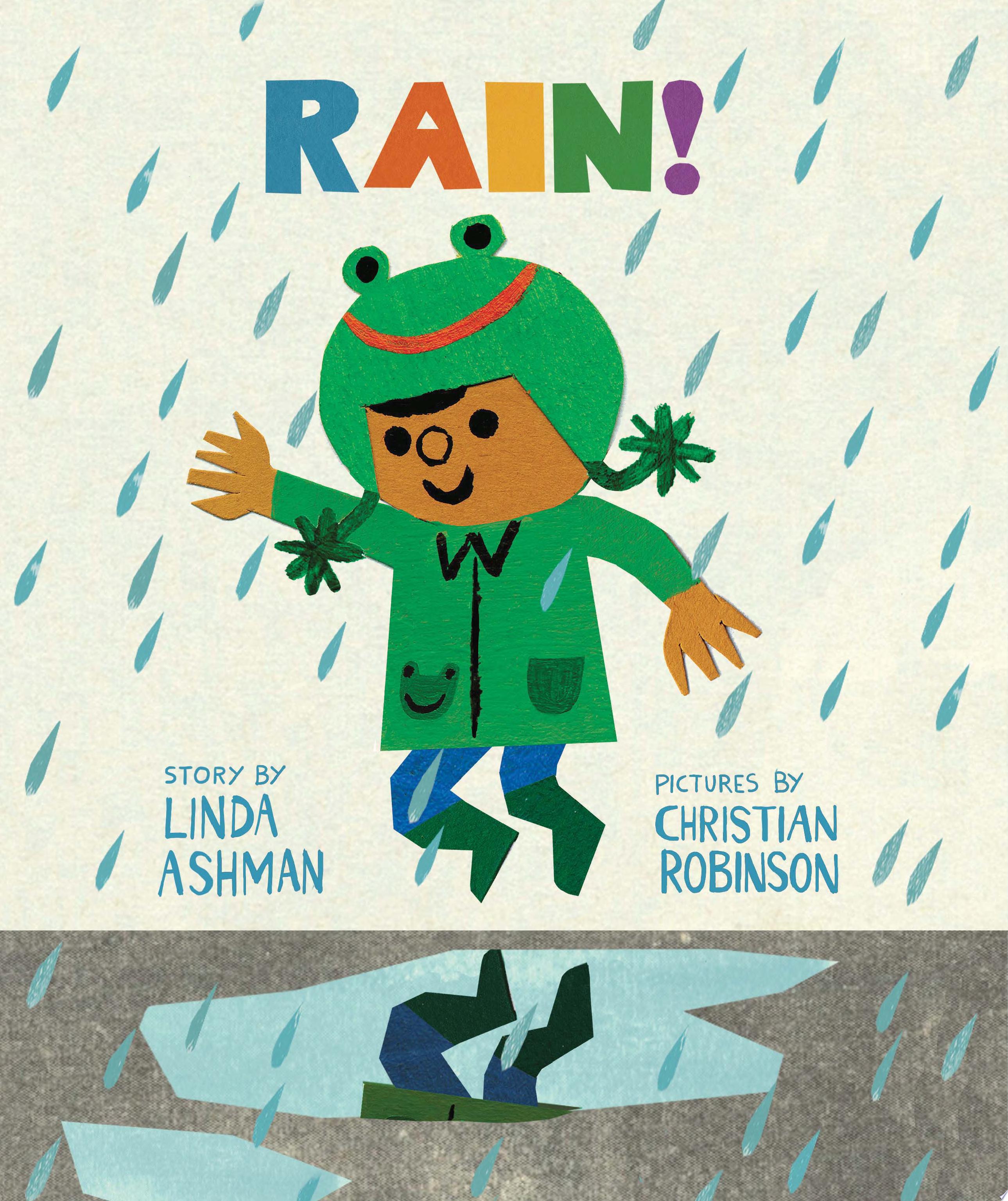
One rainy day in the city, an eager little boy exclaims, "Rain!" Across town a grumpy man grumbles, "Rain." In this endearing picture book, a rainy-day cityscape comes to life in vibrant, cut-paper-style artwork. The boy in his green frog hat splashes in puddles--"Hoppy, hoppy, hoppy!"--while the old man curses the "dang puddles." Can the boy's natural exuberance (and perhaps a cookie) cheer up the grouchy gentleman and turn the day around?
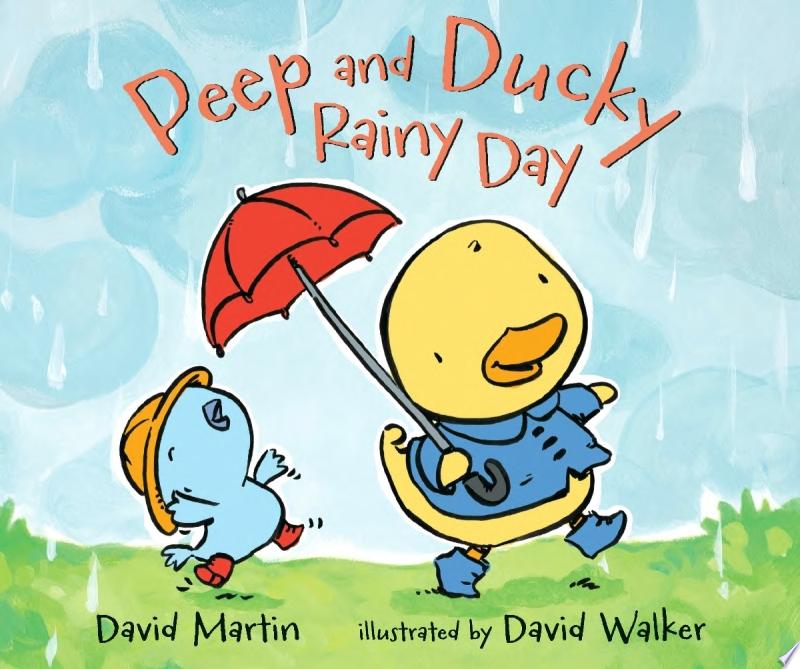
When Peep visits Ducky on a rainy day, the little pals have no trouble finding things to do. Inside, there is a tent to build and a pillow fight to be had. And outside, with the help of galoshes and umbrella, it's fun to captain a boat—until awhoosh of wind and a clap of thunder sends them running back in! Perfectly tuned to a toddler sensibility, this exuberant tale will enchant both listener and reader.
In this delightful tribute to one of the simple joys of childhood, "Puddles" follows two children who, the morning after a night of rain and thunder, splash through puddles and run through the mud. Full color.
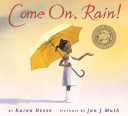
"Come on, Rain!" Tess pleads to the sky as listless vines and parched plants droop in the endless heat. Then the clouds roll in, and the rain pours. And Tess, her friends, and their Mamas join in a rain dance to celebrate the shower that renews both body and spirit. Through exquisite language and acute observation, Karen Hesse evokes this refreshing experience, and Jon J Muth's lyrical artwork perfectly reflects the spirit of the text.
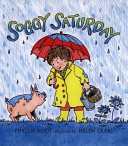
When the rain washes the blue right out of the sky, Bonnie Bumble and the inhabitants on her farm find themselves feeling a bit down, and Bonnie must find a way to make everything and everyone happy once again!
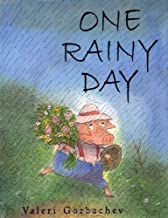
Youngsters must discover why Pig is soaking wet even though he has found shelter under a huge tree with all of the other animals during a torrential downpour, in a delightful picture book that features a giant, fold-out spread.
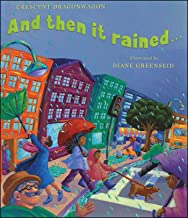
And then it rained...
And what a long time since it has rained! A whole apartment building full of overjoyed neighbors revel in the raininess. It's the perfect day to read a book on dinosaurs, to stay home and bake bread, or even to go out for a splishy-splashy adventure to a cafe with your father for a bowl of hot soup.
But when it keeps raining day after day after day, baking bread becomes dull, and splishy-splashy walks become plain old wet ones and not at all adventuresome. You begin to long for the kind of weather where you'd want to eat ice cream, not soup. Naturally everyone starts grumbling....Everyone, that is, except for the wise father of one grouchy little boy because...
The sun comes out!
And what a long time since it has come! A whole apartment building full of overjoyed neighbors celebrate the sunniness. For it's the perfect day to go roller skating, visit the bakery, or put on your shiny cool sunglasses and stroll out for a sunny day adventure, including a ringside seat at an outdoor cafe with your father for a dish of ice cream.
But when the sun gets hotter and hotter, day after day after day, roller skating gets exhausting, and a walk becomes less and less of an adventure and more and more uncomfortable. You begin to long for the kind of weather where you'd want to eat soup, not ice cream. Naturally everyone starts grumbling....Everyone, that is, except for the wise father of one grouchy little boy because...
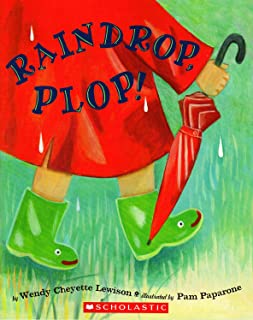
A young girl and her dog find many things to count on a rainy day, both as they play outside and after they come home to a warm, dry house.
Pitter-Pat! Pitter-patter, pitter-pat! Little Hedgehog is very excited when he wakes up to the sound of raindrops. Finally he can wear his spiffy new raincoat, hat, and boots, and use his shiny new umbrella. But soon the rain shower turns into a storm and Little Hedgehog's rainy day turns into a great big adventure! Little Hedgehog must use his new raingear to rescue his friends.
Bored with rain, sun, fog, and snow, King Derwin of Didd summons his royal magicians to create something new and exciting to fall from the sky. What he gets is a storm of sticky green globs called Oobleck, which soon causes a royal mess. But with the assistance of the wise page boy Bartholomew, the king (along with young readers) learns that the simplest words can sometimes solve the biggest problems.
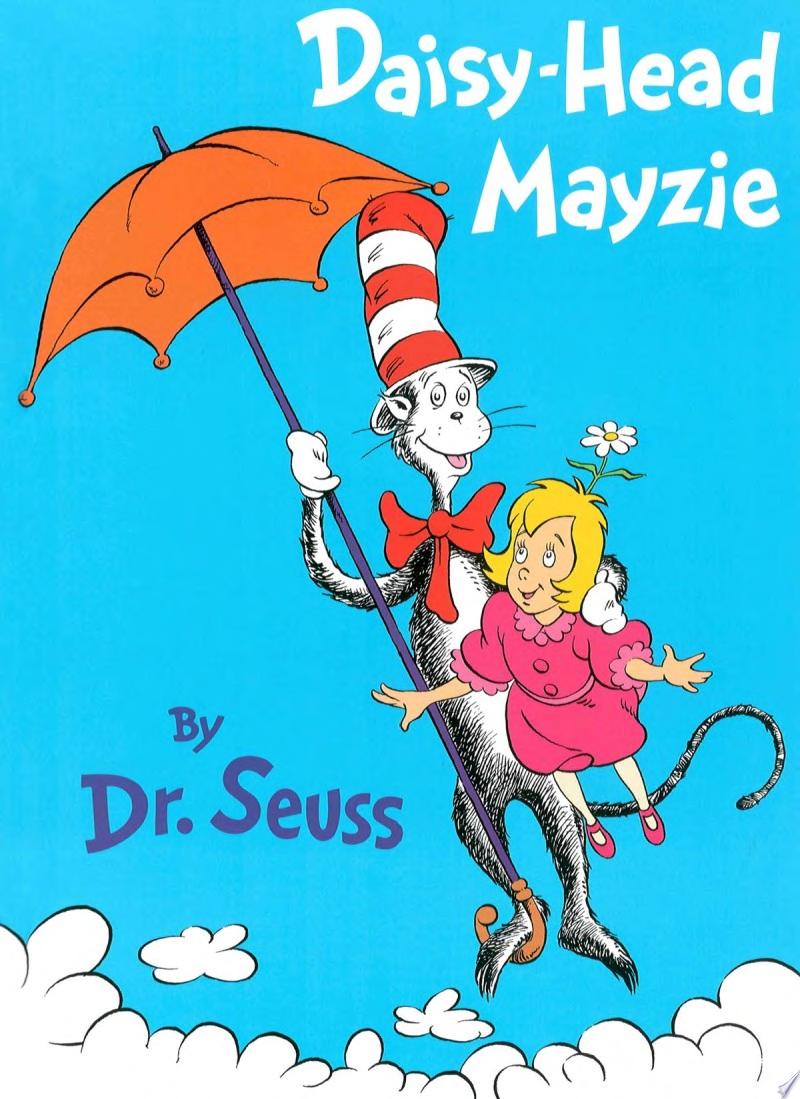
In the same zany way that the Cat wreaks havoc in The Cat in the Hat, the darling blossom that springs from Mayzie’s head sets off a series of madcap reactions that will leave young readers (and their lucky parents) giggling with glee.
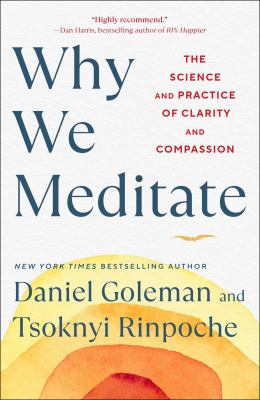
We all experience negative emotions from time to time. But in a world with as much frenzy and pressure as ours, it’s incredibly easy for these same emotions to become destructive. Now, by blending Eastern tradition with Western science, Why We Meditate effortlessly helps you embrace and understand meditation as never before.
With accessible and eye-opening advice based on groundbreaking neuroscience, this guidebook helps you not only break free from negative patterns of thought and behavior but radically embrace your very being. Revolutionize your health, relationships, and soul with this book that is perfect for both serious meditators and those new to the practice.
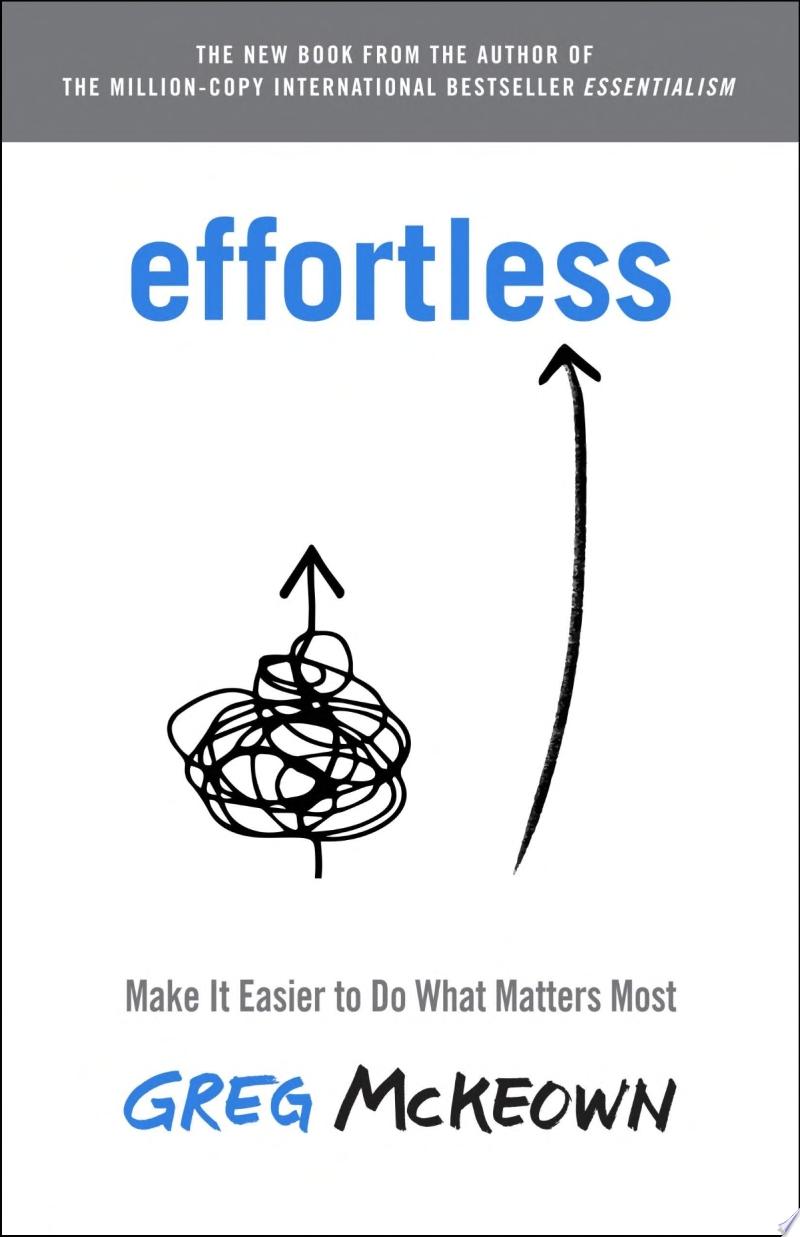
As high achievers, we’ve been conditioned to believe that the path to success is paved with relentless work. That if we want to overachieve, we have to overexert, overthink, and overdo. That if we aren’t perpetually exhausted, we’re not doing enough.
But lately, working hard is more exhausting than ever. And the more depleted we get, the more effort it takes to make progress. Stuck in an endless loop of “Zoom, eat, sleep, repeat,” we’re often working twice as hard to achieve half as much.
Getting ahead doesn’t have to be as hard as we make it. No matter what challenges or obstacles we face, there is a better way: instead of pushing ourselves harder, we can find an easier path.
Effortless offers actionable advice for making the most essential activities the easiest ones, so you can achieve the results you want, without burning out.
Effortless teaches you how to:
• Turn tedious tasks into enjoyable rituals
• Prevent frustration by solving problems before they arise
• Set a sustainable pace instead of powering through
• Make one-time choices that eliminate many future decisions
• Simplify your processes by removing unnecessary steps
• Make relationships easier to maintain and manage
• And much more
The effortless way isn't the lazy way. It's the smart way. It may even be the only way.
Not every hard thing in life can be made easy. But we can make it easier to do more of what matters most.
The newest book from beloved author Julia Cameron, The Listening Path is a transformational journey to deeper, more profound listening and creativity. Over six weeks, readers will be given the tools to become better listeners—to their environment, the people around them, and themselves. The reward for learning to truly listen is immense. As we learn to listen, our attention is heightened and we gain healing, insight, clarity. But above all, listening creates connections and ignites a creativity that will resonate through every aspect of our lives.
The Listening Path offers a new method of creative and personal transformation. Each week, readers will be challenged to expand their ability to listen in a new way, beginning by listening to their environment and culminating in learning to listen to silence. These weekly practices open up a new world of connection and fulfillment. In a culture of bustle and constant sound, The Listening Path is a deeply necessary reminder of the power of truly hearing.
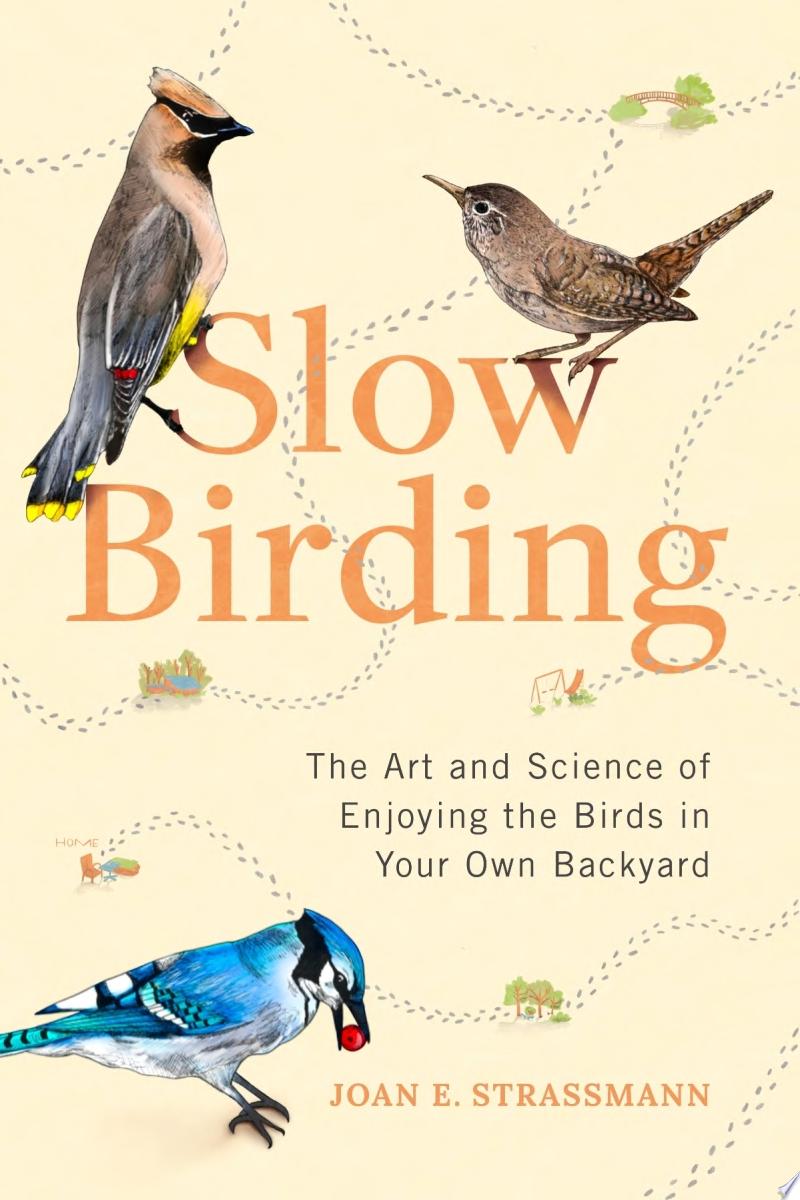
A one-of-a-kind guide to birding locally that encourages readers to slow down and notice the spectacular birds all around them.
Many birders travel far and wide to popular birding destinations to catch sight of rare or “exotic” birds. In Slow Birding, evolutionary biologist Joan E. Strassmann introduces readers to the joys of birding right where they are.
In this inspiring guide to the art of slow birding, Strassmann tells colorful stories of the most common birds to be found in the United States—birds we often see but might not have considered deeply before. For example, northern cardinals thrive in the city, where they are free from predators. White brows on a male white-throated sparrow indicate that he is likely to be a philanderer. This essential guide to the fascinating world of common, everyday birds features:
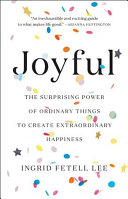
Have you ever wondered why we stop to watch the orange glow that arrives before sunset, or why we flock to see cherry blossoms bloom in spring? Is there a reason that people -- regardless of gender, age, culture, or ethnicity -- are mesmerized by baby animals, and can't help but smile when they see a burst of confetti or a cluster of colorful balloons.
We are often made to feel that the physical world has little or no impact on our inner joy. Increasingly, experts urge us to find balance and calm by looking inward -- through mindfulness or meditation -- and muting the outside world. But what if the natural vibrancy of our surroundings is actually our most renewable and easily accessible source of joy?
In Joyful, designer Ingrid Fetell Lee explores how the seemingly mundane spaces and objects we interact with every day have surprising and powerful effects on our mood. Drawing on insights from neuroscience and psychology, she explains why one setting makes us feel anxious or competitive, while another fosters acceptance and delight -- and, most importantly, she reveals how we can harness the power of our surroundings to live fuller, healthier, and truly joyful lives.
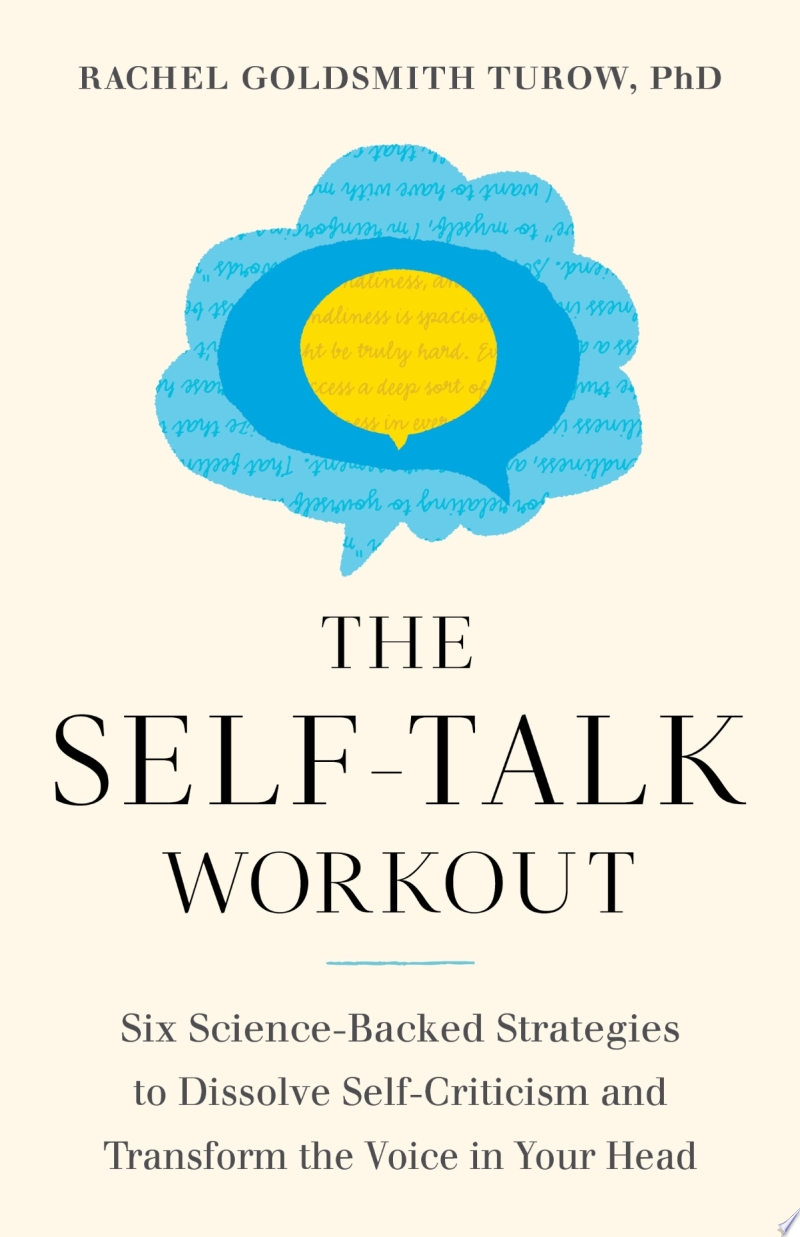
Self-talk matters, but what methods of building healthy self-talk actually work? This how-to guide shares evidence-based techniques to go from being your own worst critic to your own best friend.
Perhaps you want to be nicer to yourself but don’t really know how to get there. Or maybe you’re someone who assumes self-criticism is a permanent part of your personality. Rest assured you’re not alone—millions of people struggle with the toll that excessive self-criticism takes on their minds, energy levels, jobs, and relationships. And problems with self-talk vary dramatically from one person to the next: they can appear as mild but persistent inner criticism, full-blown self-loathing, or the pain of internalized oppression or abuse.
After over twenty years of working with individuals, groups, and classes on self-criticism and related challenges, psychologist and mindfulness teacher Dr. Rachel Goldsmith Turow offers the “self-talk workout”—six doable exercises that can help you replace self-criticism with self-kindness and self-encouragement. Specific self-talk strategies such as “Spot the success,” “Fail forward,” and “Allowing all feelings, skillfully,” require just a few minutes a day. These skills can be practiced individually to transform your self-talk, or you can choose to combine two or more exercises to enhance your self-talk workout. Each chapter features a core exercise, variations on the strategy that might feel right for you, scientific studies supporting each approach, and success stories to inspire your own practice.
Turow includes examples from her own life and experiences as a psychotherapist, as well as lessons from her students and respected public figures such as Michelle Obama and Thich Nhat Hanh, to show that the burden of harsh self-criticism need not go on forever: the way that we relate to ourselves can be changed.
Lose yourself inb the calming world of origami and create beautiful objects to amaze and inspire your friends and family. With the expertly detailed guidance of Mark Bolitho, learn the wondrous art of paper-folding, inspired by these 15 attractive models.
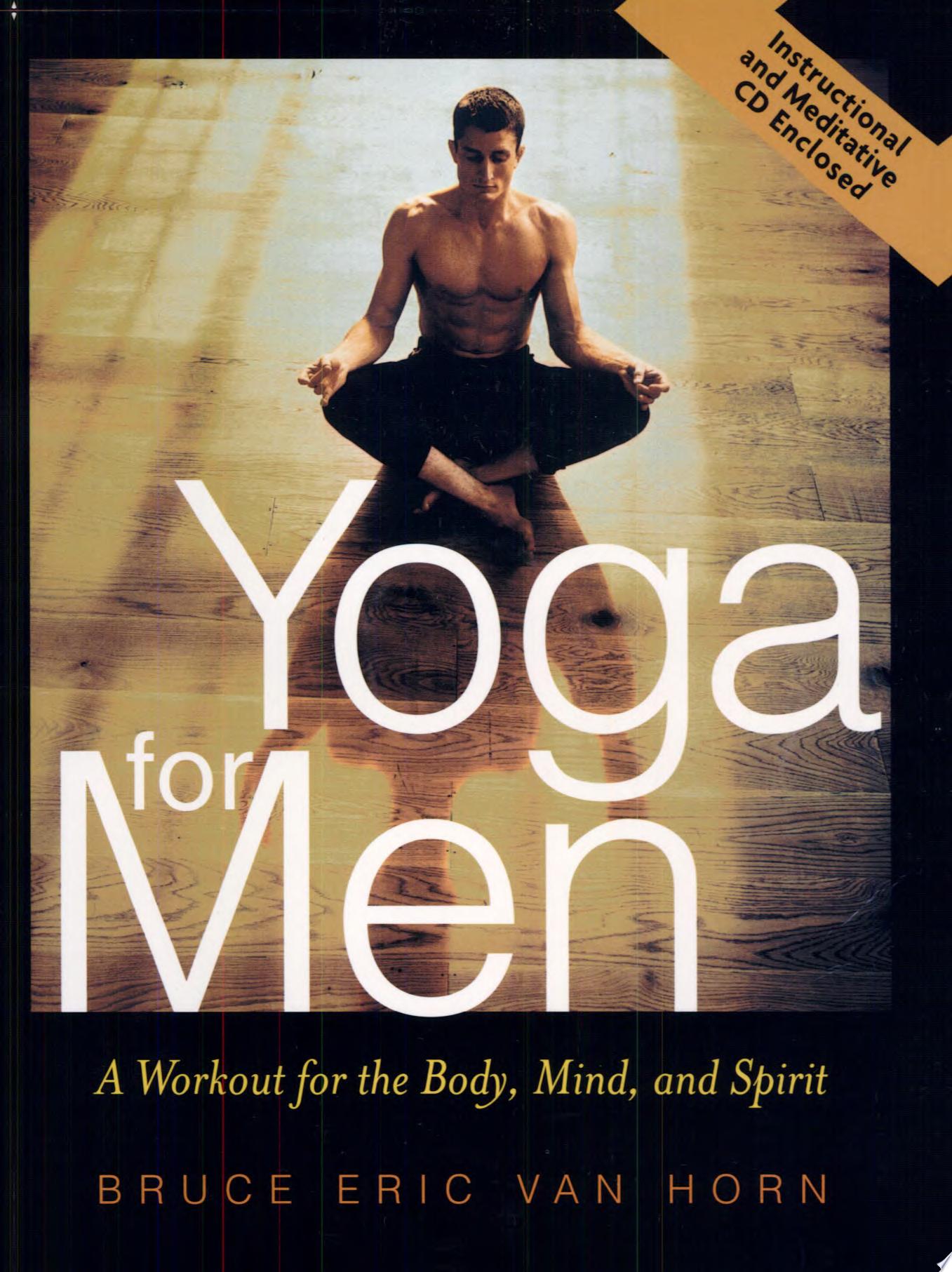
From the moment the alarm clock sounds to the time his head hits the pillow again, the typical man experiences dozens of stressful events every day. Whether it's tight finances, employment insecurity, challenging family issues, or all of the above, the majority of men fail to cope with such stress in a healthy way. Yoga for Men equips men with the yoga know-how to improve their physical, mental, and spiritual health. An increasing number of men are tapping into the power yoga can release within them. Yoga for Men homes in on yoga techniques that address issues of specific concern to today's males, including reducing the risk of prostate cancer, decreasing daily tension, increasing sexual performance, improving metabolism, and enhancing flexibility and muscle mass. Using a plain-English, straightforward approach, author Bruce Van Horne walks male readers through yoga tips that will help them get into better shape, release fears that are blocking personal goals, and enjoy life more fully.

Are You Ready to Discover What Aim True Means to You?
Yoga teacher and inspirational speaker Kathryn Budig is known for her ability to encourage others to set their intentions and goals, no matter how lofty, and work toward them while staying true to themselves.
In Aim True, Budig extends her empowering message beyond the mat. Life is an adventure that is meant to be explored, challenged, and fully lived. The best part? When you approach life with an open mind and heart, the possibilities are endless. Allow Budig to be your guide along the journey with:
• A 5-day purification process
• 6 yoga sequences to put into practice
• Over 85 recipes to seduce your inner Top Chef
• An introduction to meditation
• Homeopathic self-care and beauty recipes
Whether your goal is to love who you are right now, reshape the way you view food, develop a meditation practice, or discover new ways to embrace the great balancing act that is life, this holistic approach to yoga, diet, and mindfulness has something for you. Filled with vibrant photographs and whimsical illustrations, this guide is as beautiful as it is life-changing.
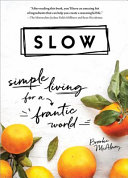
Free yourself from the frantic and embrace the joy of slow...ing contribution to the slow living community.
Are you constantly striving to keep up with life's busy expectations? It's easy to feel consumed with the desire to "succeed" and "acquire," and miss the simple opportunities waiting for you to slow down: a walk in the forest, sharing laughter with family, a personal moment of gratitude...
Once upon a time, it became clear to Brooke McAlary that the key to happiness was discovering a simpler, more fulfilling existence. She put the brakes on her stressful path, and reorganized her life to live outside the status-quo, emphasizing depth, connection and meaningful experiences. Alongside Brooke's affirming personal stories of breaking down and rising up, Slow provides practical advice and fascinating insights into the benefits and challenges of the slow life, such as:
--Decluttering to de-owning
--Messiness to mindfulness
--Asking why, to asking where to now?
Slow is an inspirational guide on creating a life filled with the things that really matter, and is meant for anyone seeking peace, meaning, and joy in their otherwise rapid lives. Slowly--of course.
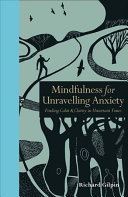
Anxiety is a state many of us know only too well and Generalized Anxiety Disorder (GAD) is on the global increase too. Mindfulness for Unravelling Anxiety helps loosen the knots and tangles of anxiety and explores the ways we can break their stifling bonds through better understanding of the root of the problem – the mind. Richard Gilpin shares frank personal anecdotes and therapeutic insights, revealing how mindfulness can create a path for us through anxiety. With wisdom and clarity, he guides us through the transformative practice of mindfulness meditation.
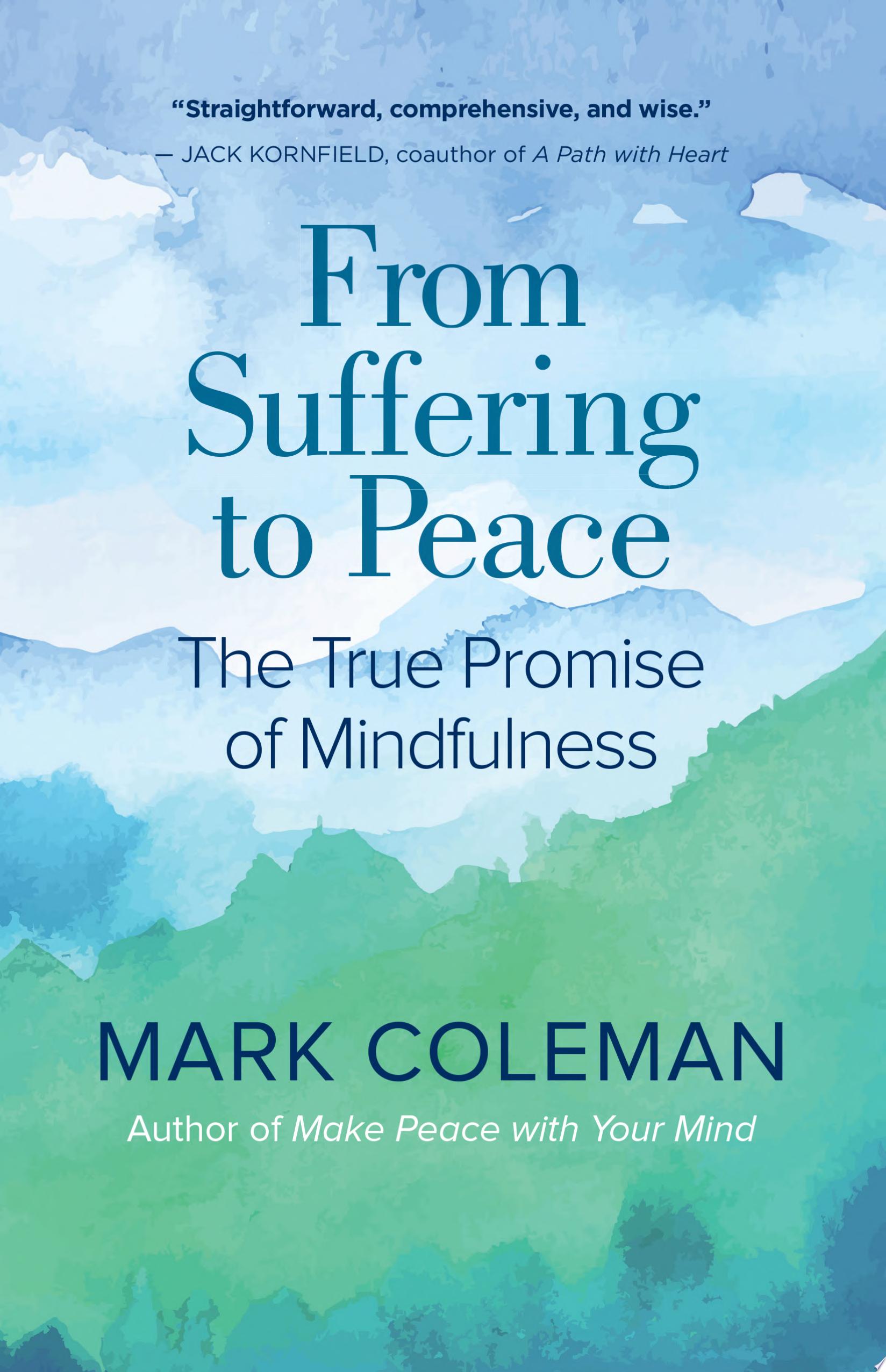
Like yoga before it, mindfulness is now flourishing in every sector of society. It is a buzzword in everything from medicine to the military. Mark Coleman, who has studied and taught mindfulness meditation for decades, draws on his knowledge to not only clarify what mindfulness truly means but also reveal the depth and potential of this ancient discipline. Weaving together contemporary applications with practices in use for millennia, his approach empowers us to engage with and transform the inevitable stress and pain of life, so we can discover genuine peace — in the body, heart, mind, and wider world. While profound and multilayered, the mindfulness teachings Coleman shares have proved effective in a wide variety of settings. From Suffering to Peace will help readers of all kinds access and benefit from the "true promise of mindfulness."
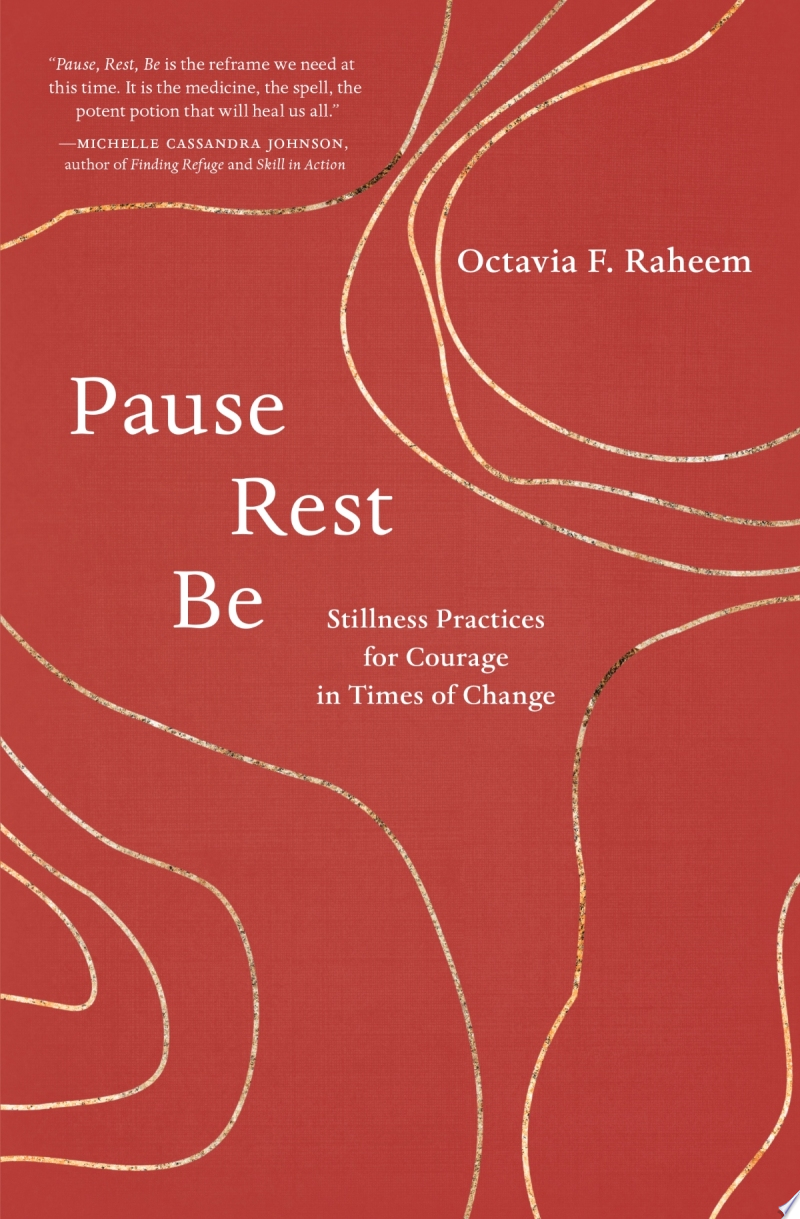
Restoring your body, mind, and spirit amid change is an act of courage, empowerment, and hope. This warm, powerful guide will help you honor the changes and spaces in your life with purposeful rest and reflection.
If you're trying to push your way through endings, beginnings, and places of uncertainty, only to find yourself more confused, disconnected, tired, and uncertain, this book will hold and fortify you. Yoga teacher and activist Octavia Raheem offers us the motivation and guidance we need to restore ourselves in the midst of all sorts of change. She gives us three simple restorative yoga poses (savasana, side lying pose, and child’s pose), and offers short teachings, reflections, and practices to see us through times of ending, beginning, and liminal/transitional space. She shows us how slowing down, stillness, and deeper connection to our own transitions empower us to move through collective shifts with more grace--and what it means to navigate shifts and change with presence and courage.
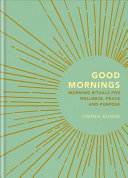
Early-morning rituals for contentment, clarity and purpose.
In this inspirational guide, Linnea Dunne shows how building a life-affirming ritual into your morning routine is an act of self-care that can benefit both your physical and mental health, enhance your productivity and positively influence your day. Whether it's a dedicated yoga practice at sunrise, mindfulness meditation just after waking, journalling while you sip your morning coffee, or listening to birdsong in the back garden before you tackle your daily commute, a morning ritual can enhance your health and wellbeing, and bring increased contentment, clarity and purpose to your day. With countless ideas for nourishing morning practices and invaluable advice on how to create a morning ritual that is unique to you and takes your individual needs, circumstances and time constraints into account, this book will help you to make the most of the peace and promise of the first moments of every day.
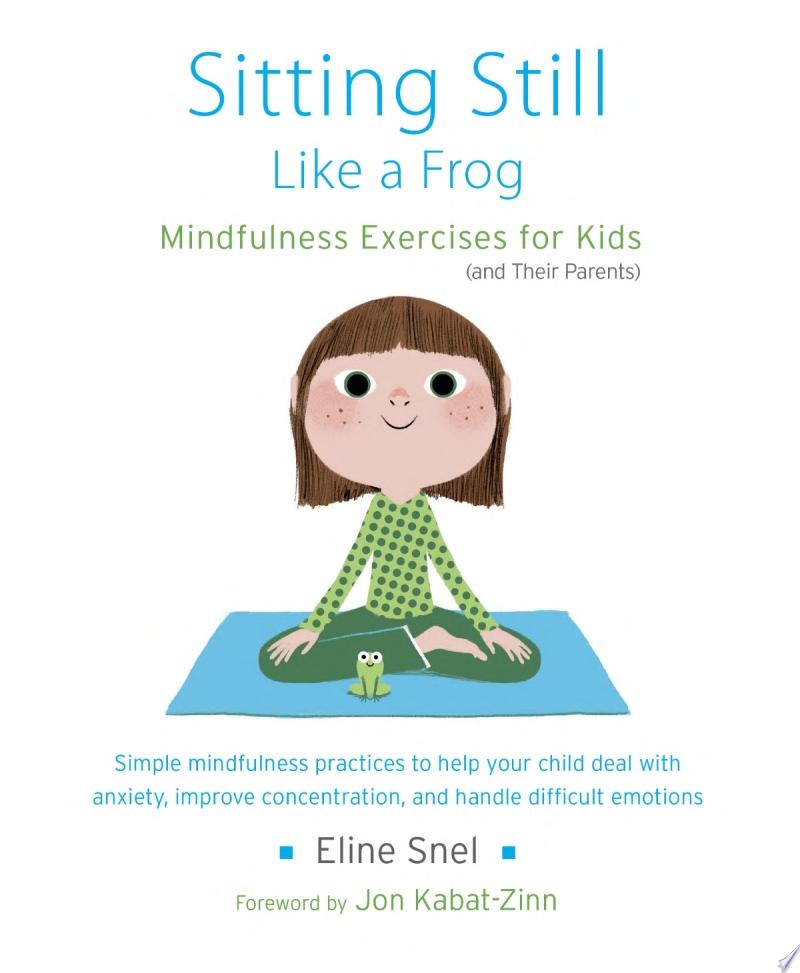
Simple mindfulness practices to help your child (ages 5-12) deal with anxiety, improve concentration, and handle difficult emotions—with a 60-minute audio CD of guided exercises
Mindfulness—the quality of attention that combines full awareness with acceptance of each moment, just as it is—is gaining broad acceptance among mental health professionals as an adjunct to treatment. This little book is a very appealing introduction to mindfulness meditation for children and their parents. In a simple and accessible way, it describes what mindfulness is and how mindfulness-based practices can help children calm down, become more focused, fall asleep more easily, alleviate worry, manage anger, and generally become more patient and aware. The book contains eleven practices that focus on just these scenarios, along with short examples and anecdotes throughout.

"Miracles Now by New York Times best-selling author Gabrielle Bernstein will help readers clear stress and find peace--even if they only have a minute to spare. Bernstein knows that most of us don't have time for an hour of yoga or 30 minutes of meditation to dissolve our anxiety, so she has hand-picked 111 techniques to combat our most common problems--from fear and anxiety to burnout and fatigue. Inspired by some of the greatest spiritual teachings, Bernstein offers up spirit-based principles, meditations, and practical, do-them-in-the-moment tools to help readers burst through blocks to live with more ease. She breaks down each technique Spirit Junkie style--with meditations, assessment questions, and step-by-step guidance--while incorporating lessonsfrom A Course in Miracles.As readers benefit from the techniques they'll be able to share them. Each practice has been boiled down to a 140-character description--or Miracle Message--which can be tweeted, pinned on Pinterest, posted to Facebook, or shared on Instagram. Each Miracle Message will end with the hashtag #111Miracles. Ebook readers can share from their device.Readers familiar with Bernstein's fun and innovative take on spirituality will scoop up her latest work. And those who are discovering her will appreciate her tech-savvy approach to spirituality and transformation"--

The author of Full Catastrophe Living explains how anyone can use mindfulness--the art of living each moment fully as it happens--to reduce anxiety, achieve inner peace, and enrich life.
This accessible guide to cultivating deep, restful sleep — naturally — combines author Tzivia Gover’s expertise in both mindfulness and dreamwork. Along with a healthy dose of encouragement, Gover offers practical lifestyle advice, simple yoga poses, 10-minute meditations, and easy breathing exercises, plus visualization and journaling activities. You’ll also learn how to set the scene for safe, productive dreaming and cultivate your dream recall. This holistic approach extends into your waking hours with tips on morning routines to ensure that sound sleep leads to refreshed, more conscious living all day long.

A longtime teacher and Harvard researcher presents the latest science on the benefits of T’ai Chi as well as a practical daily program for practitioners of all ages
Conventional medical science on the Chinese art of T’ai Chi now shows what T’ai Chi masters have known for centuries: regular practice leads to more vigor and flexibility, better balance and mobility, and a sense of well-being. Cutting-edge research from Harvard Medical School also supports the long-standing claims that T’ai Chi also has a beneficial impact on the health of the heart, bones, nerves and muscles, immune system, and the mind. This research provides fascinating insight into the underlying physiological mechanisms that explain how T’ai Chi actually works.
Dr. Peter M. Wayne, a longtime T’ai Chi teacher and a researcher at Harvard Medical School, developed and tested protocols similar to the simplified program he includes in this book, which is suited to people of all ages, and can be done in just a few minutes a day.
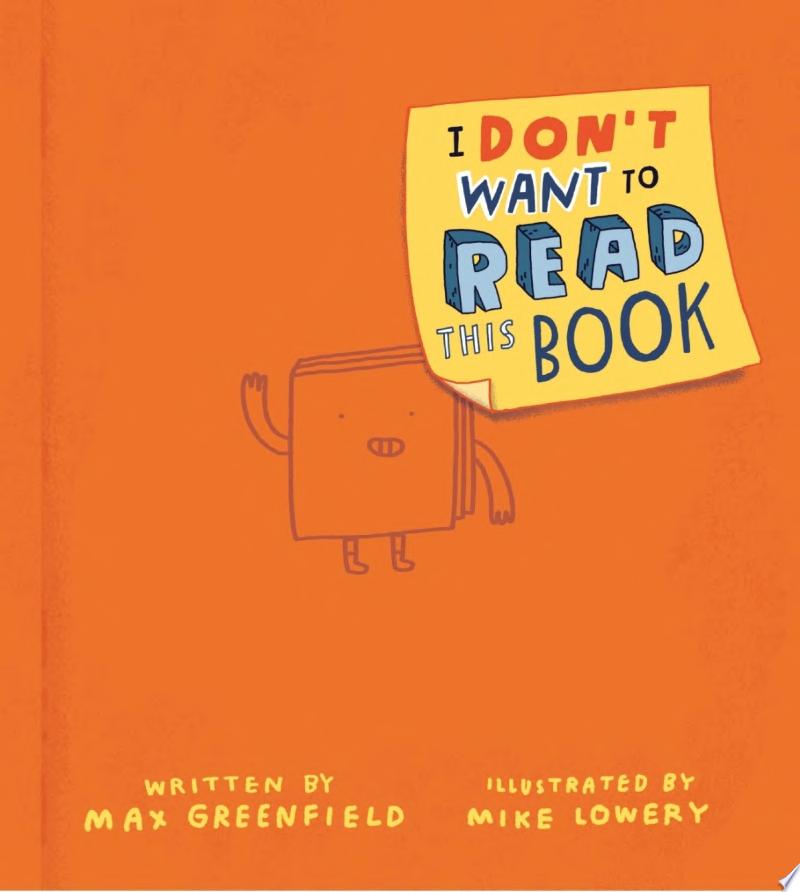
Words, sentences, and even worse, paragraphs fill up books. Ugh! So what's a reluctant reader to do? Actor Max Greenfield and New York Times bestselling illustrator Mike Lowery bring the energy and laugh-out-loud fun out for every child (and parent) who thinks they don’t want to read a book. This clever and playful read-aloud breaks the fourth wall and will have all readers coming back for laughs again and again!
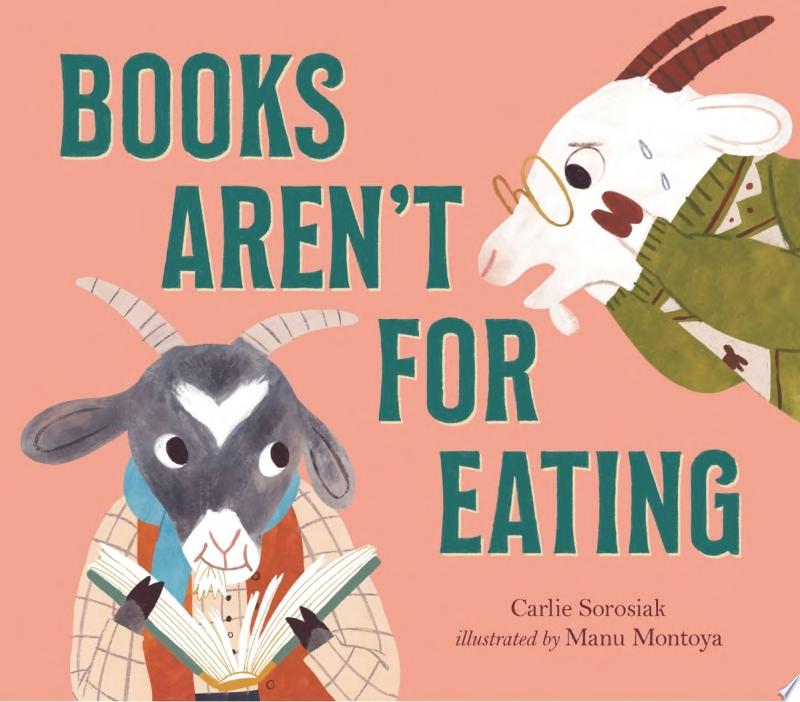
How can Leopold, goat and bookstore owner, find the perfect book for a fellow goat—one the visitor will enjoy reading, not munching?
Leopold the goat owns a delightful bookstore, and he has a talent for matching his customers with the ideal book—an adventure story for the girl in the rain boots, a novel about gnomes for the man who loves to laugh, and a book of birds for the woman in the feathered hat. But one day, another goat arrives and proceeds to eat every book Leopold offers. Can Leopold find just the right one to tempt this reluctant reader? This funny, charming tale of the transformative power of books is a celebration of that first special story that sparks a child’s love of reading.
Sheila sat down to eat her first book and the strangest thing happened . . . The book ate HER. One by one, cousins Sheila, Gerald, and Geraldine Grunion are eaten . . . by their books. This peculiar turn of events flings them far and wide. Sheila escapes the weight of the world entirely, while Gerald braves the wonder of seeing it up close. And Geraldine, well, Geraldine turns as terrifically terrible as she possibly can. Join the Grunions on adventures no child can resist!
In this book a young girl pens a love letter to libraries and books, and powerfully expresses the need for diversity and the importance of representation in stories!
There was just this one thing, this nagging suspicion, that I didn't meet the criteria for a heroine's condition. In the books that I read, an absence of melanin was a clear omission.
A voracious young reader loves nothing more than going to the library and poring through books all day, making friends with characters and going off on exciting adventures with them. However, the more she reads, the more she notices that most of the books don't have characters that look like her, and the only ones that do tell about the most painful parts of their history. Where are the heroines with Afros exploring other planets and the superheroes with 'locs saving the day?
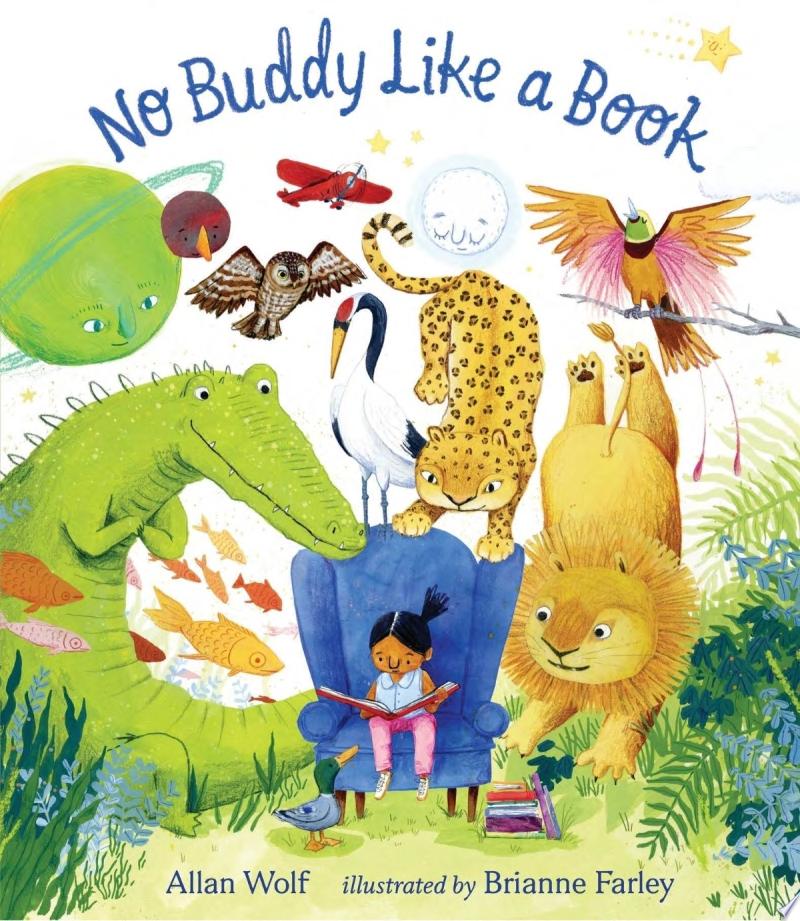
This celebration of the power of books is a rallying cry for letting imaginations soar.
We learn important stuff from books.
We learn to speak and think.
We learn why icebergs stay afloat . . .
and why Titanics sink.
Have you ever wanted to climb to the top of Everest with one hand behind your back? Kiss a crocodile all by yourself on the Nile River? How about learning how to bottle moonlight, or track a distant star? There are endless things to discover and whole universes to explore simply by reading a book. But books are only smears of ink without the reader's mind to give their letters meaning and bring them to life. With a rollicking, rhyming text and delightful artwork, poet and storyteller Allan Wolf and illustrator Brianne Farley remind us that books, no matter how they may be consumed, give readers of every background an opportunity to expand their world and spark their imagination. With infectious enthusiasm, No Buddy Like a Book offers an ode to the wonders of language--written, spoken, and everything in between.
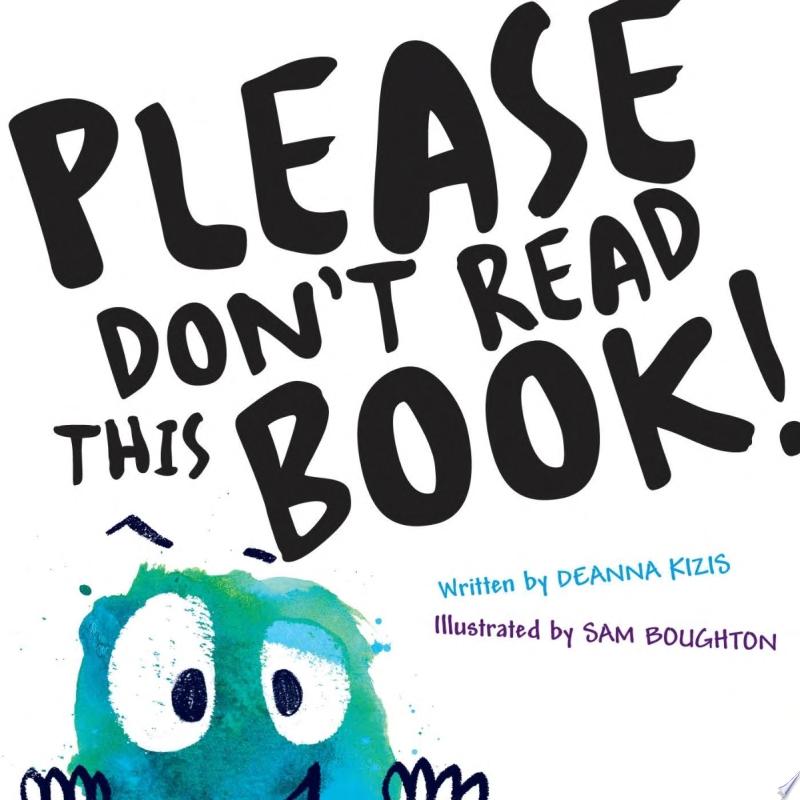
In this laugh-out-loud book that begs readers to break the rules, silliness and hilarity reign supreme! Perfect for fans of The Book with No Pictures.
Wait--are you reading this book? Even though the cover asked you not to?
Well, if you're going to read it, then you'll have to follow the rules, or you're going to have WAY too much fun. And you don't want to have FUN, do you? DO YOU?!
That's what I thought. So definitely, positively, DO NOT read this book!
Join along for zany antics, silly sounds, and endless fun in this breaks-the-fourth-wall book that will have readers coming back time and time again--regardless of what the title says.

Stanley has stocked his bookmobile with lots of great books to take to the local park. Everyone stops by to borrow a book that Stanley selected just for them, and later at the main branch, he hosts an out-of-this-world author visit from Agatha Mouse! After a hard day at work, Stanley winds down his day with a familiar supper and bath routine that makes this series a great pick for bedtime reading!
A stunning new picture book from Newbery Medalist Kwame Alexander and Caldecott Honoree Melissa Sweet! This New York Times bestselling duo has teamed up for the first time to bring you How to Read a Book, a poetic and beautiful journey about the experience of reading.
Find a tree—a black tupelo or dawn redwood will do—and plant yourself.
With these words, an adventure begins. Kwame Alexander’s evocative poetry and Melissa Sweet’s lush artwork come together to take readers on a sensory journey between the pages of a book.
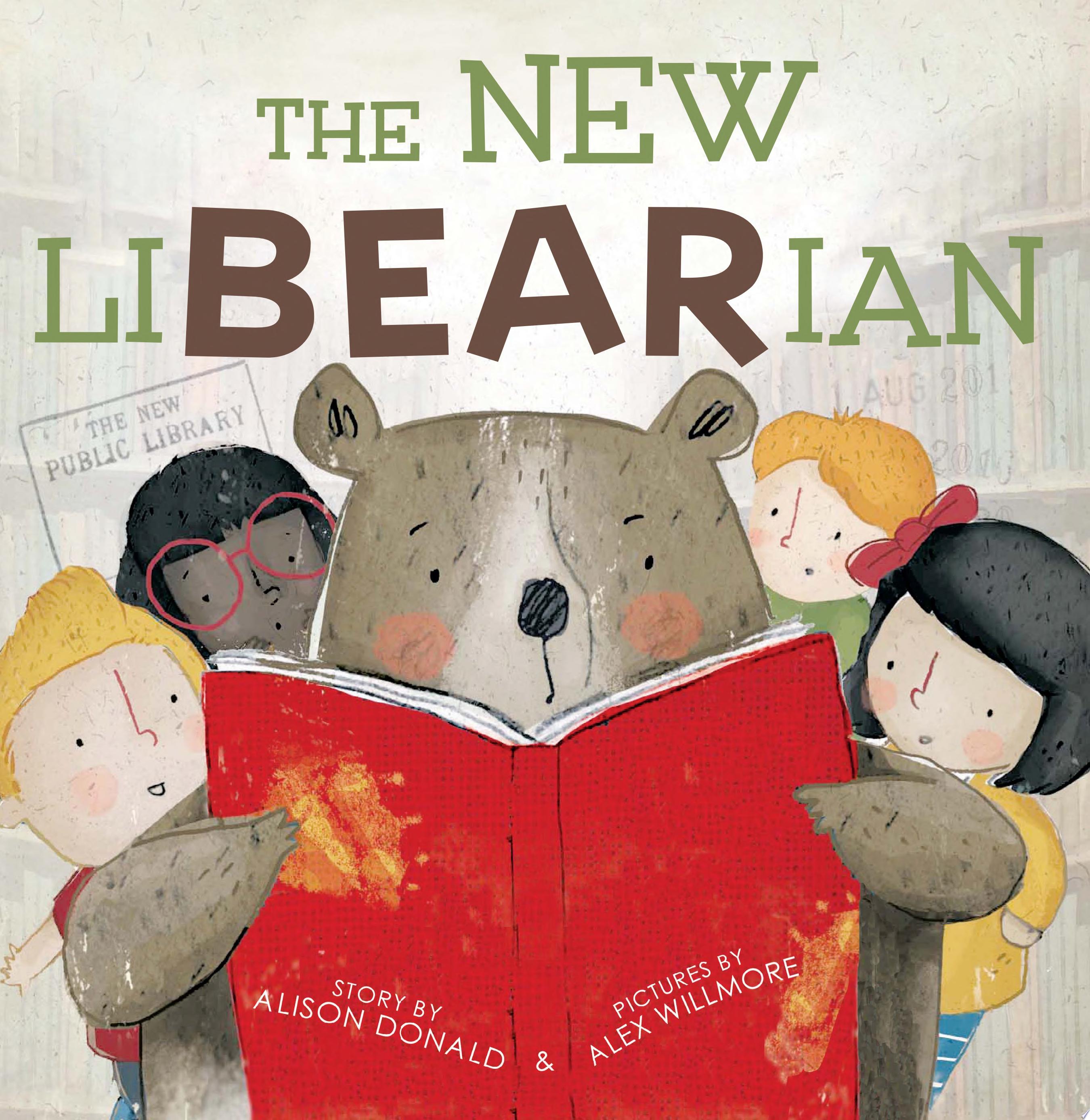
A visit to the library can be full of surprises. When the librarian is late for story time, the children go off to look for her and follow mysterious paw prints to find a bear sitting at her desk. Is the bear a new librarian? Not exactly. The new LiBEARian opens a book about bears and utters a loud growl. The kids love it! Then the real librarian appears and sends the bear back into the book he came from. A fun twist at the end rounds out this winsomely illustrated tale of a universal childhood experience--story time at the library--infused with magic.
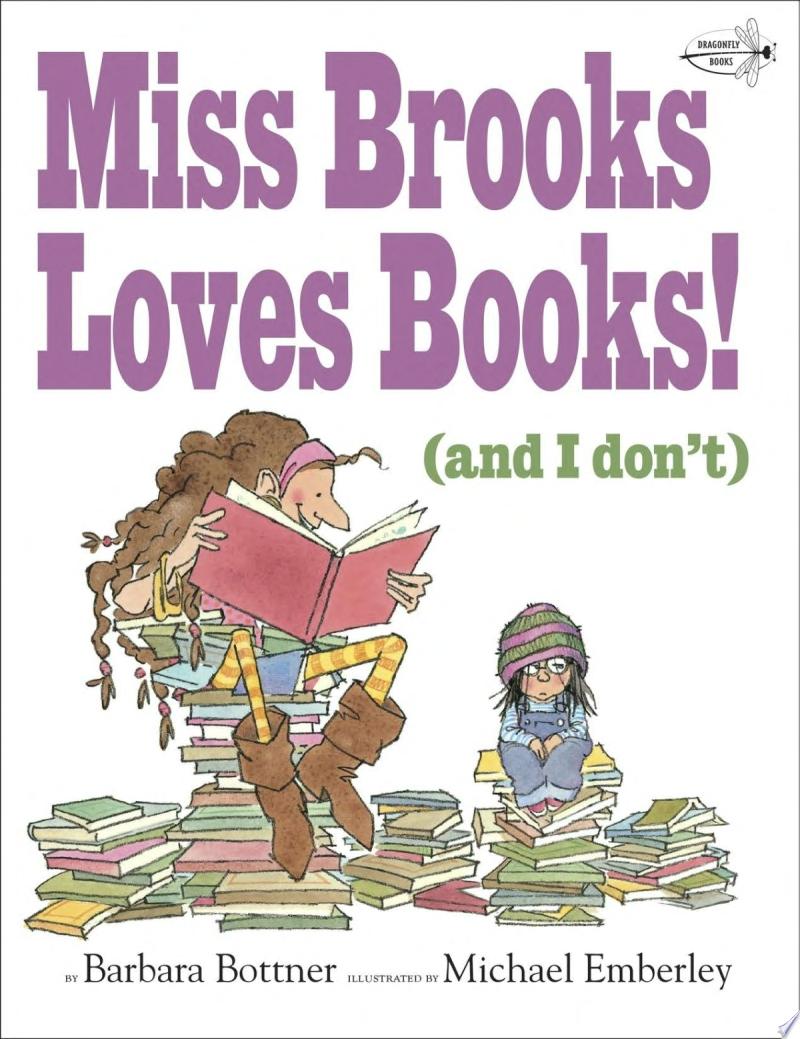
With the help of Miss Brooks, Missy’s classmates all find books they love in the library—books about fairies and dogs and trains and cowboys. But Missy dismisses them all—“Too flowery, too furry, too clickety, too yippity.”
Still, Miss Brooks remains undaunted. Book Week is here and Missy will find a book to love if they have to empty the entire library. What story will finally win over this beastly, er, discriminating child? William Steig’s Shrek!—the tale of a repulsive green ogre in search of a revolting bride—of course!
Barbara Bottner and Michael Emberley pay playful homage to the diverse tastes of child readers and the valiant librarians who are determined to put just the right book in each child’s hands.
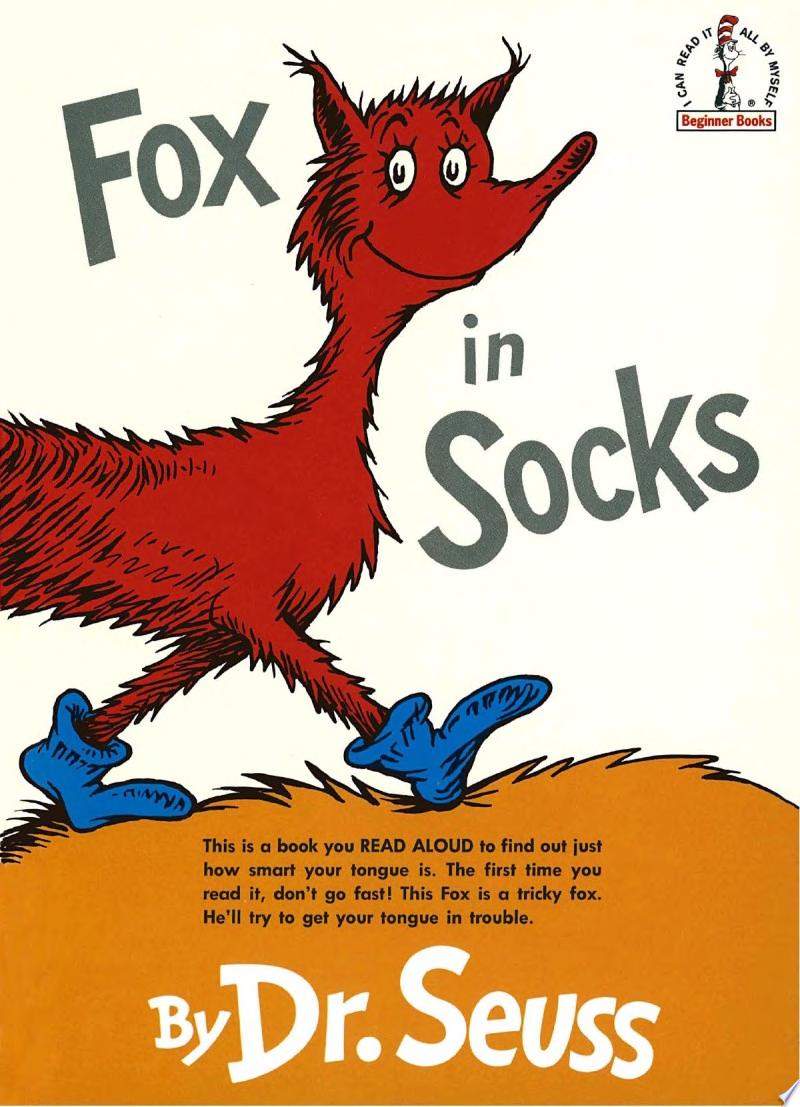
Find out how wacky words can be with Dr. Seuss and the Fox in Socks in this classic hardcover picture book of tongue tanglers!
This rhyming romp includes chicks with bricks, chewy blue glue, a noodle eating poodle, and so much more! Just try to keep your tongue out of trouble! Seuss piles his the energetic rhymes into a mountain of hilarity that the whole family will enjoy. Rhyming has never been this fun!
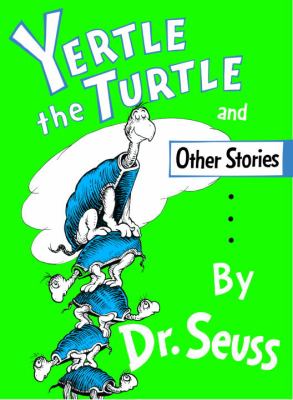
Dr. Seuss presents three modern fables in the rhyming favorite Yertle the Turtle and Other Stories. The collection features tales about greed (“Yertle the Turtle”), vanity (“Gertrude McFuzz”), and pride (“The Big Brag”). In no other book does a small burp have such political importance!
Barack Obama is known by many as the first Black president of the United States. But readers might not know that President Obama likes to collect comic books and play basketball! In this title, young readers are introduced to Barack Obama's life and presidency through leveled text and high-quality images. Special features include a map, a timeline, and a thought-provoking question.
Traces the life of Thomas Edison, one of the most influential inventors in American history, from his early childhood and education through his sources of inspiration and challenges faced, early successes, and the many inventions for which he is best known.
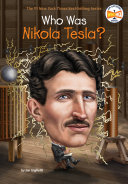
When Nikola Tesla arrived in the United States in 1884, he didn't have much money, but he did have a letter of introduction to renowned inventor Thomas Edison. The working relationship between the two men was short lived, though, and the two scientist-inventors became harsh competitors. One of the most influential scientists of all time, Nikola Tesla is celebrated for his experiments in electricity, X-rays, remote controls, and wireless communications. His invention of the Tesla coil was instrumental in the development of radio technology.
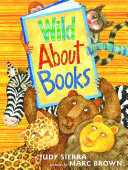
It started the summer of 2002, when the Springfield librarian, Molly McGrew, by mistake drove her bookmobile into the zoo.
In this rollicking rhymed story, Molly introduces birds and beasts to this new something called reading. She finds the perfect book for every animal—tall books for giraffes, tiny ones for crickets. “She even found waterproof books for the otter, who never went swimming without Harry Potter.” In no time at all, Molly has them “forsaking their niches, their nests, and their nooks,” going “wild, simply wild, about wonderful books.” Judy Sierra’s funny animal tale coupled with Marc Brown’s lush, fanciful paintings will have the same effect on young Homo sapiens. Altogether, it’s more fun than a barrel of monkeys!
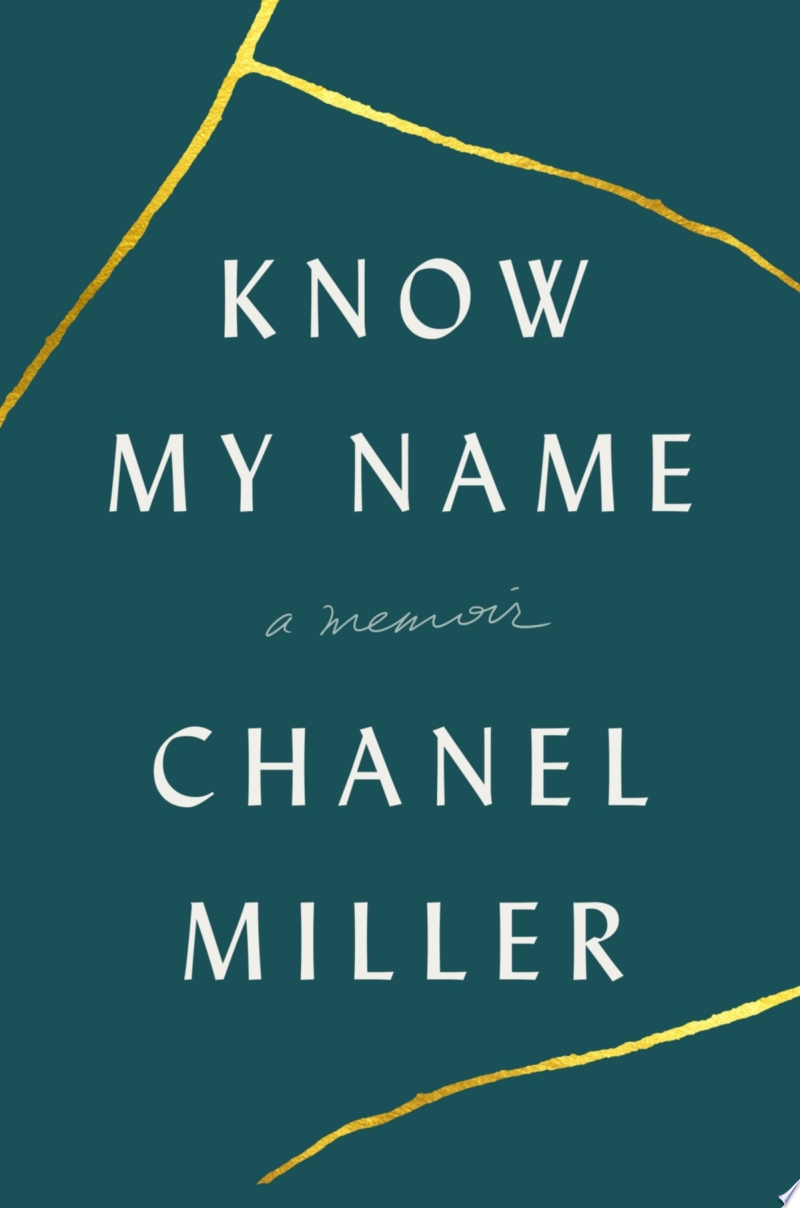
She was known to the world as Emily Doe when she stunned millions with a letter. Brock Turner had been sentenced to just six months in county jail after he was found sexually assaulting her on Stanford's campus. Her victim impact statement was posted on BuzzFeed, where it instantly went viral--viewed by eleven million people within four days, it was translated globally and read on the floor of Congress; it inspired changes in California law and the recall of the judge in the case. Thousands wrote to say that she had given them the courage to share their own experiences of assault for the first time.
Now she reclaims her identity to tell her story of trauma, transcendence, and the power of words. It was the perfect case, in many ways--there were eyewitnesses, Turner ran away, physical evidence was immediately secured. But her struggles with isolation and shame during the aftermath and the trial reveal the oppression victims face in even the best-case scenarios. Her story illuminates a culture biased to protect perpetrators, indicts a criminal justice system designed to fail the most vulnerable, and, ultimately, shines with the courage required to move through suffering and live a full and beautiful life.
Know My Name will forever transform the way we think about sexual assault, challenging our beliefs about what is acceptable and speaking truth to the tumultuous reality of healing. It also introduces readers to an extraordinary writer, one whose words have already changed our world. Entwining pain, resilience, and humor, this memoir will stand as a modern classic.
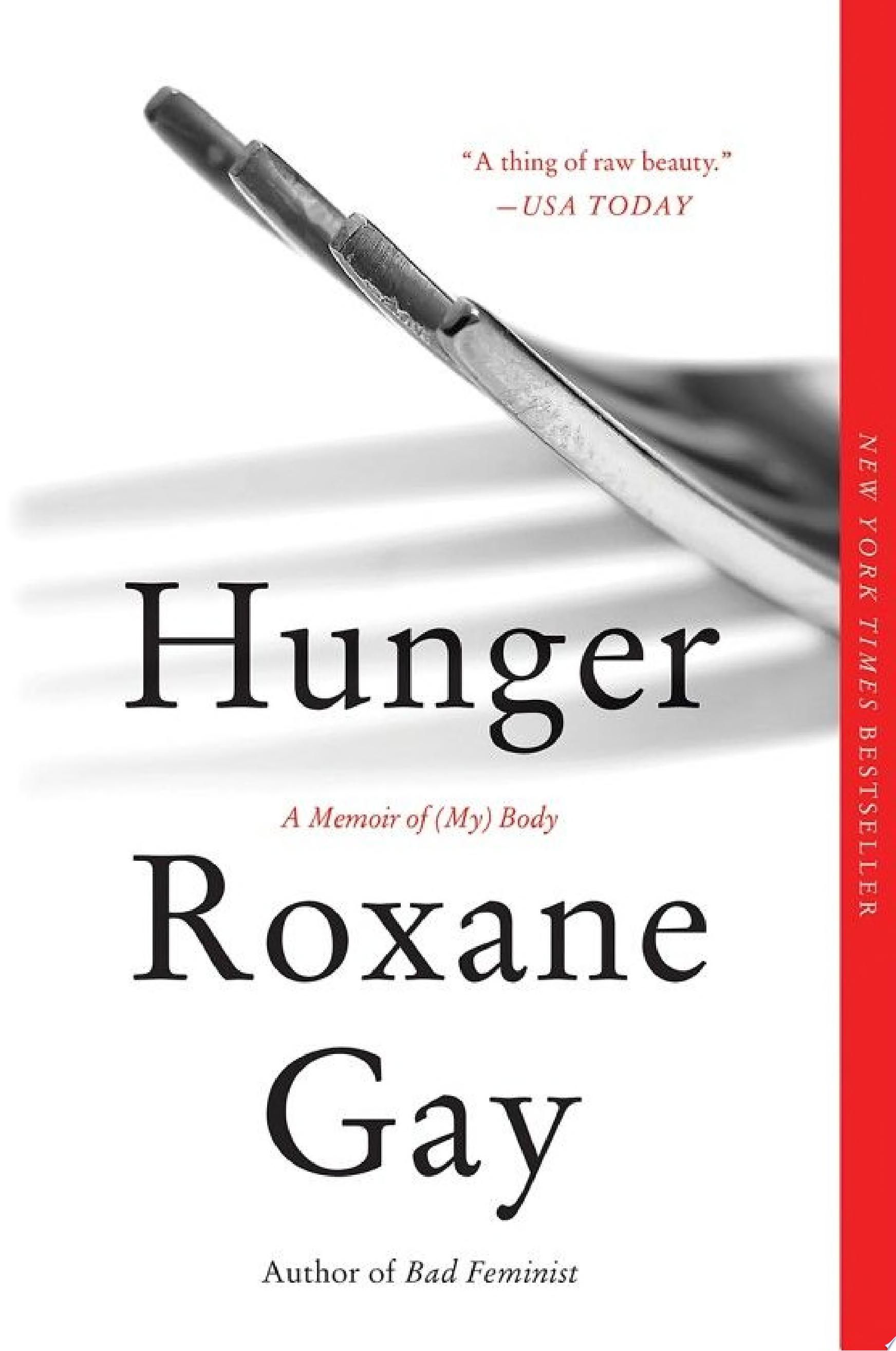
In her phenomenally popular essays and long-running Tumblr blog, Roxane Gay has written with intimacy and sensitivity about food and body, using her own emotional and psychological struggles as a means of exploring our shared anxieties over pleasure, consumption, appearance, and health. As a woman who describes her own body as “wildly undisciplined,” Roxane understands the tension between desire and denial, between self-comfort and self-care. In Hunger, she explores her past—including the devastating act of violence that acted as a turning point in her young life—and brings readers along on her journey to understand and ultimately save herself.
With the bracing candor, vulnerability, and power that have made her one of the most admired writers of her generation, Roxane explores what it means to learn to take care of yourself: how to feed your hungers for delicious and satisfying food, a smaller and safer body, and a body that can love and be loved—in a time when the bigger you are, the smaller your world becomes.
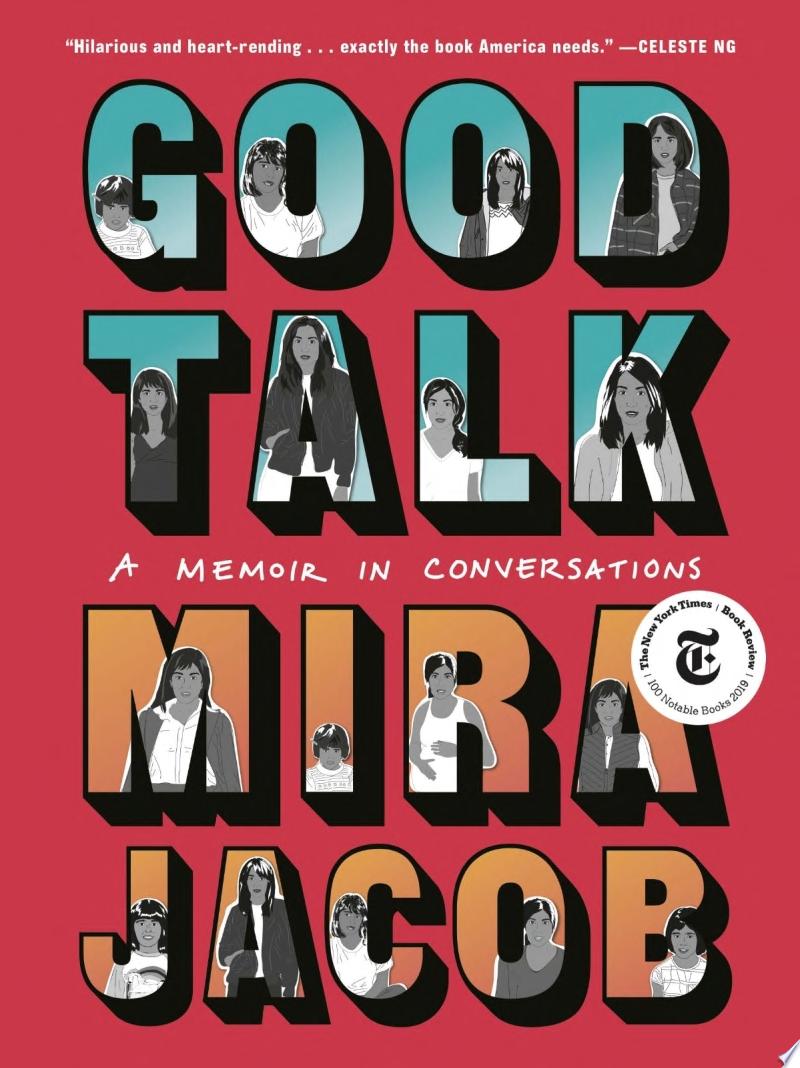
“How brown is too brown?”
“Can Indians be racist?”
“What does real love between really different people look like?”
Like many six-year-olds, Mira Jacob’s half-Jewish, half-Indian son, Z, has questions about everything. At first they are innocuous enough, but as tensions from the 2016 election spread from the media into his own family, they become much, much more complicated. Trying to answer him honestly, Mira has to think back to where she’s gotten her own answers: her most formative conversations about race, color, sexuality, and, of course, love.
Written with humor and vulnerability, this deeply relatable graphic memoir is a love letter to the art of conversation—and to the hope that hovers in our most difficult questions.
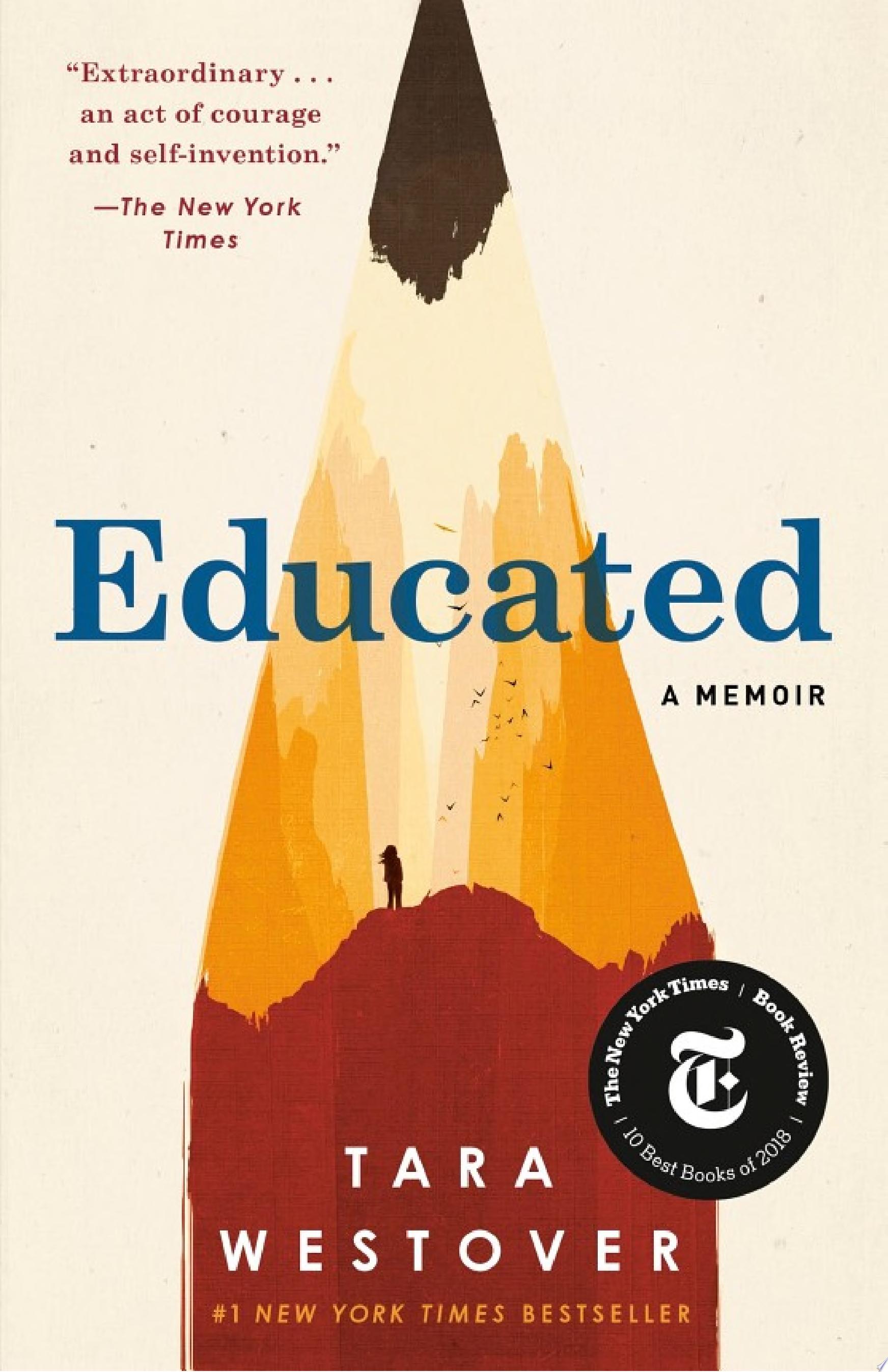
Born to survivalists in the mountains of Idaho, Tara Westover was seventeen the first time she set foot in a classroom. Her family was so isolated from mainstream society that there was no one to ensure the children received an education, and no one to intervene when one of Tara’s older brothers became violent. When another brother got himself into college, Tara decided to try a new kind of life. Her quest for knowledge transformed her, taking her over oceans and across continents, to Harvard and to Cambridge University. Only then would she wonder if she’d traveled too far, if there was still a way home.
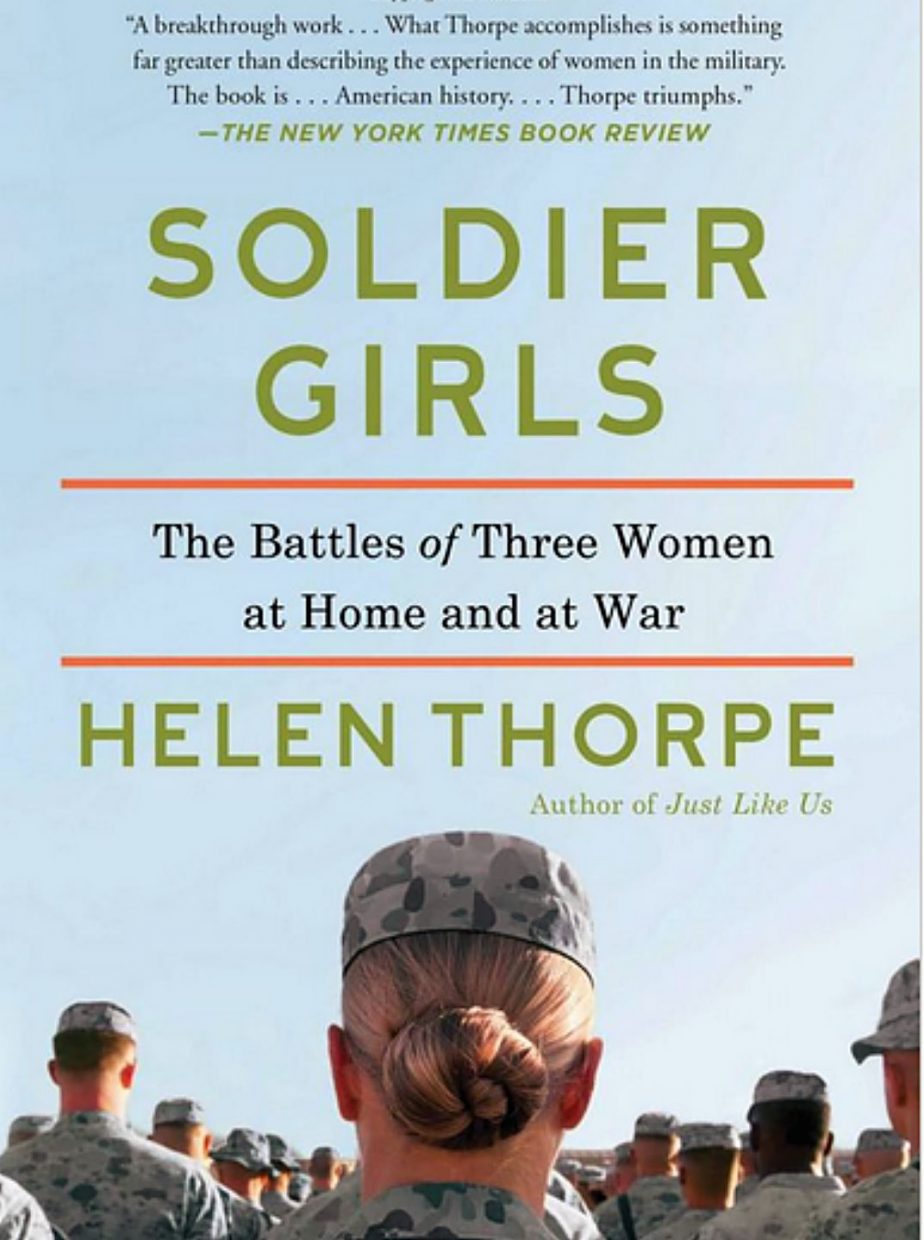
America has been continuously at war since the fall of 2001. This has been a matter of bitter political debate, of course, but what is uncontestable is that a sizeable percentage of American soldiers sent overseas in this era have been women. The experience in the American military is, it’s safe to say, quite different from that of men. Surrounded and far outnumbered by men, imbedded in a male culture, looked upon as both alien and desirable, women have experiences of special interest.
In Soldier Girls, Helen Thorpe follows the lives of three women over twelve years on their paths to the military, overseas to combat, and back home…and then overseas again for two of them. These women, who are quite different in every way, become friends, and we watch their interaction and also what happens when they are separated. We see their families, their lovers, their spouses, their children. We see them work extremely hard, deal with the attentions of men on base and in war zones, and struggle to stay connected to their families back home. We see some of them drink too much, have illicit affairs, and react to the deaths of fellow soldiers. And we see what happens to one of them when the truck she is driving hits an explosive in the road, blowing it up. She survives, but her life may never be the same again.
Deeply reported, beautifully written, and powerfully moving, Soldier Girls is truly groundbreaking.
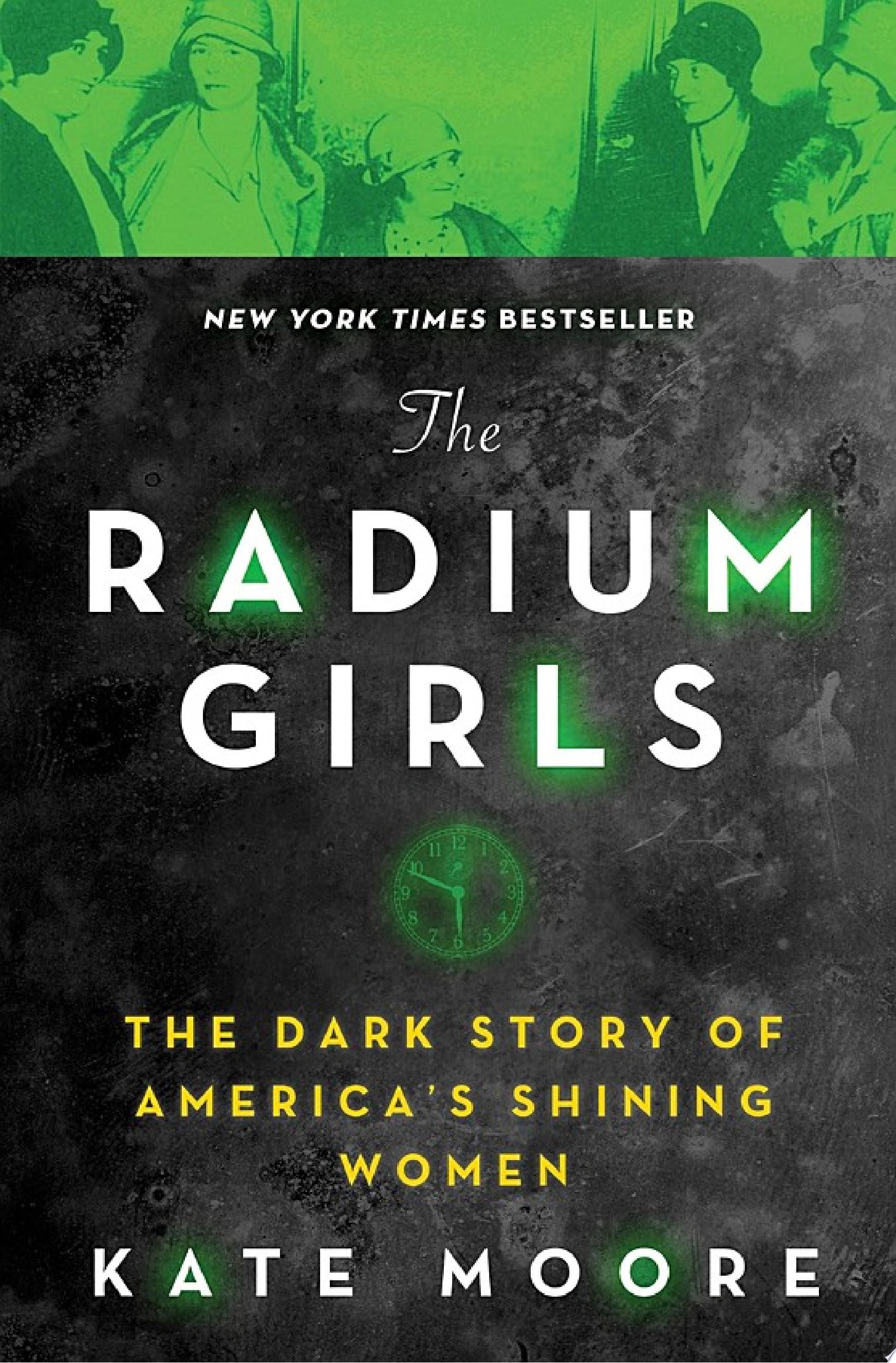
In the dark years of the First World War, radium makes gleaming headlines across the nation as the fresh face of beauty, and wonder drug of the medical community. From body lotion to tonic water, the popular new element shines bright. Meanwhile, hundreds of girls toil amidst the glowing dust of the radium-dial factories. The glittering chemical covers their bodies from head to toe; they light up the night like industrious fireflies. With such a coveted job, these "shining girls" are the luckiest alive — until they begin to fall mysteriously ill. And, until they begin to come forward.
As the women start to speak out on the corruption, the factories that once offered golden opportunities ignore all claims of the gruesome side effects. And as the fatal poison of the radium takes hold, the brave shining girls find themselves embroiled in one of the biggest scandals of America's early 20th century, and in a groundbreaking battle for workers' rights that will echo for centuries to come. A timely story of corporate greed and the brave figures that stood up to fight for their lives, these women and their voices will shine for years to come.
Written with a sparkling voice and breakneck pace, The Radium Girls fully illuminates the inspiring young women exposed to the "wonder" substance of radium, and their awe-inspiring strength in the face of almost impossible circumstances. Their courage and tenacity led to life-changing regulations, research into nuclear bombing, and ultimately saved hundreds of thousands of lives...
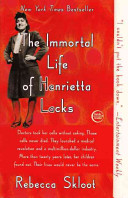
Her name was Henrietta Lacks, but scientists know her as HeLa. She was a poor Southern tobacco farmer, yet her cells--taken without her knowledge--became one of the most important tools in medicine. The first "immortal" human cells grown in culture, they are still alive today, though she has been dead for more than sixty years. HeLa cells were vital for developing the polio vaccine; uncovered secrets of cancer and viruses; helped lead to in vitro fertilization, cloning, and gene mapping; and have been bought and sold by the billions. Yet Henrietta Lacks is buried in an unmarked grave. Her family did not learn of her "immortality" until more than twenty years after her death, when scientists began using her husband and children in research without informed consent. The story of the Lacks family is inextricably connected to the dark history of experimentation on African Americans, the birth of bioethics, and the legal battles over whether we control the stuff we are made of--From publisher description.
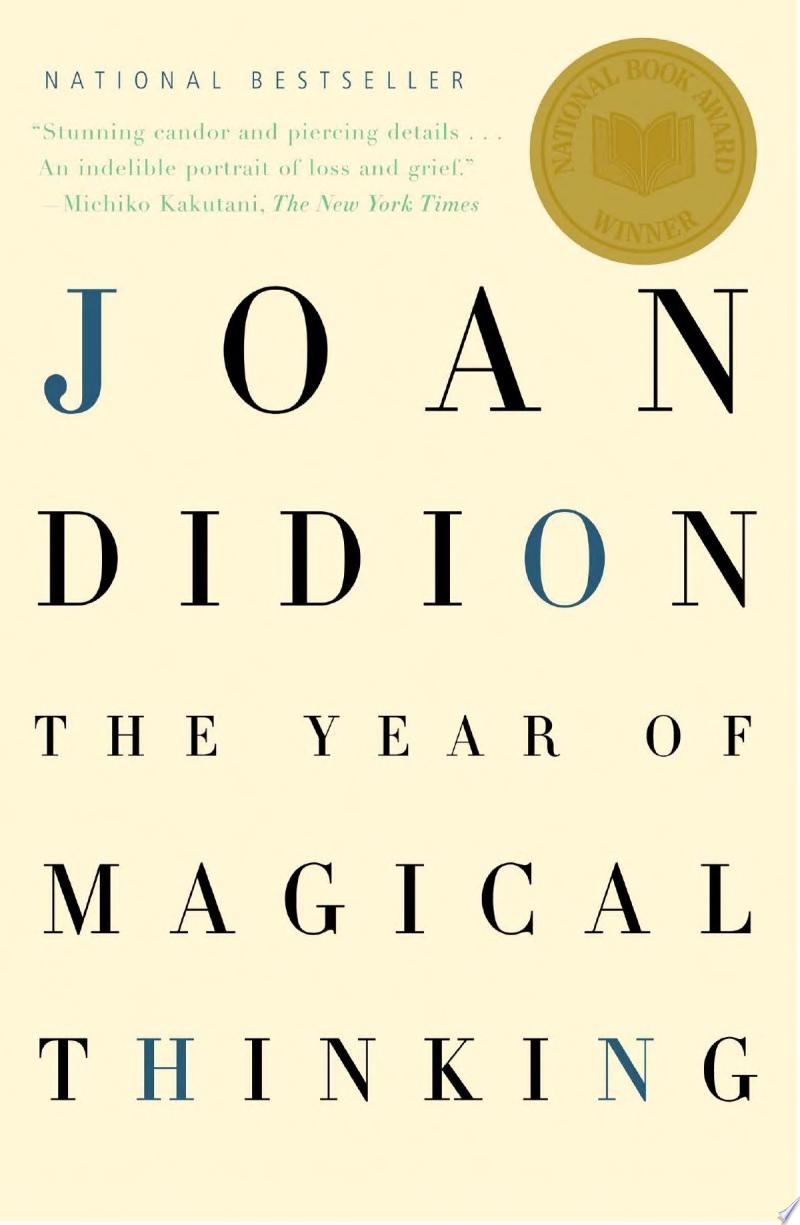
Several days before Christmas 2003, John Gregory Dunne and Joan Didion saw their only daughter, Quintana, fall ill with what seemed at first flu, then pneumonia, then complete septic shock. She was put into an induced coma and placed on life support. Days later—the night before New Year’s Eve—the Dunnes were just sitting down to dinner after visiting the hospital when John Gregory Dunne suffered a massive and fatal coronary. In a second, this close, symbiotic partnership of forty years was over. Four weeks later, their daughter pulled through. Two months after that, arriving at LAX, she collapsed and underwent six hours of brain surgery at UCLA Medical Center to relieve a massive hematoma.
This powerful book is Didion’ s attempt to make sense of the “weeks and then months that cut loose any fixed idea I ever had about death, about illness ... about marriage and children and memory ... about the shallowness of sanity, about life itself.
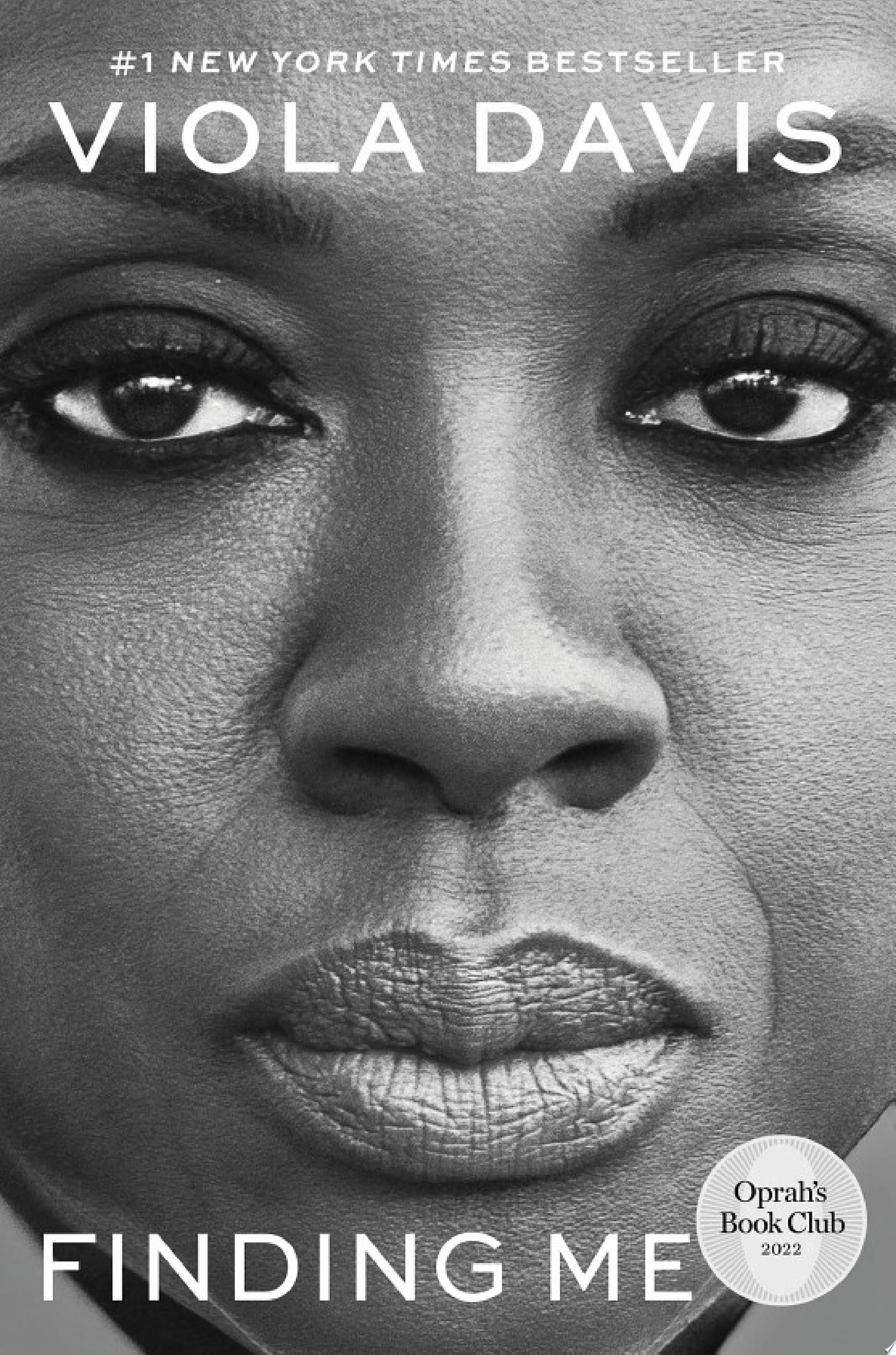
In my book, you will meet a little girl named Viola who ran from her past until she made a life-changing decision to stop running forever.
This is my story, from a crumbling apartment in Central Falls, Rhode Island, to the stage in New York City, and beyond. This is the path I took to finding my purpose but also my voice in a world that didn’t always see me.
As I wrote Finding Me, my eyes were open to the truth of how our stories are often not given close examination. We are forced to reinvent them to fit into a crazy, competitive, judgmental world. So I wrote this for anyone running through life untethered, desperate and clawing their way through murky memories, trying to get to some form of self-love. For anyone who needs reminding that a life worth living can only be born from radical honesty and the courage to shed facades and be . . . you.
Finding Me is a deep reflection, a promise, and a love letter of sorts to self. My hope is that my story will inspire you to light up your own life with creative expression and rediscover who you were before the world put a label on you.

In a life filled with meaning and accomplishment, Michelle Obama has emerged as one of the most iconic and compelling women of our era. As First Lady of the United States of America—the first African American to serve in that role—she helped create the most welcoming and inclusive White House in history, while also establishing herself as a powerful advocate for women and girls in the U.S. and around the world, dramatically changing the ways that families pursue healthier and more active lives, and standing with her husband as he led America through some of its most harrowing moments. Along the way, she showed us a few dance moves, crushed Carpool Karaoke, and raised two down-to-earth daughters under an unforgiving media glare.
In her memoir, a work of deep reflection and mesmerizing storytelling, Michelle Obama invites readers into her world, chronicling the experiences that have shaped her—from her childhood on the South Side of Chicago to her years as an executive balancing the demands of motherhood and work, to her time spent at the world’s most famous address. With unerring honesty and lively wit, she describes her triumphs and her disappointments, both public and private, telling her full story as she has lived it—in her own words and on her own terms. Warm, wise, and revelatory, Becoming is the deeply personal reckoning of a woman of soul and substance who has steadily defied expectations—and whose story inspires us to do the same.
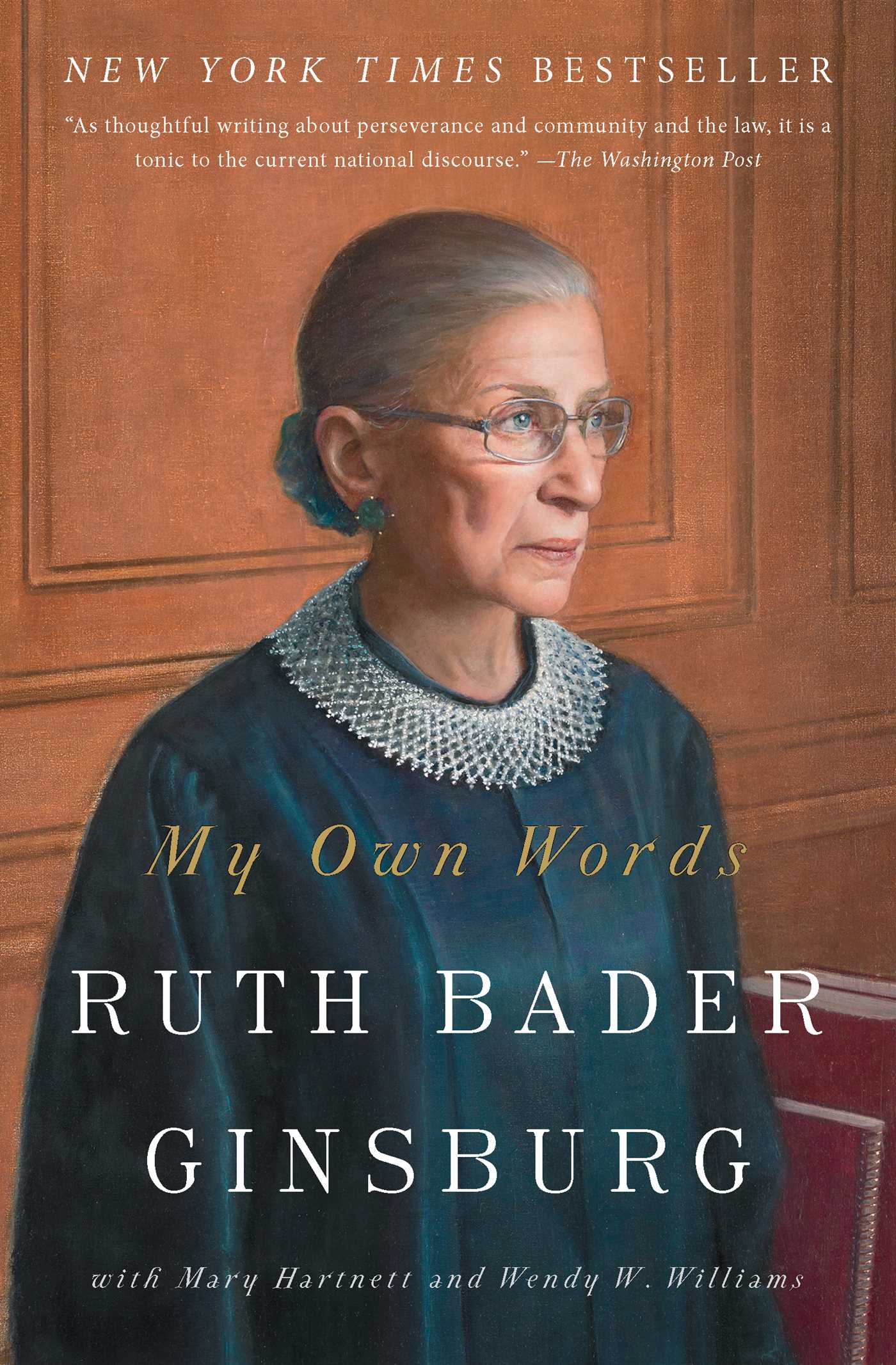
My Own Words “showcases Ruth Ginsburg’s astonishing intellectual range” (The New Republic). In this collection Justice Ginsburg discusses gender equality, the workings of the Supreme Court, being Jewish, law and lawyers in opera, and the value of looking beyond US shores when interpreting the US Constitution. Throughout her life Justice Ginsburg has been (and continues to be) a prolific writer and public speaker. This book’s sampling is selected by Justice Ginsburg and her authorized biographers Mary Hartnett and Wendy W. Williams, who introduce each chapter and provide biographical context and quotes gleaned from hundreds of interviews they have conducted.
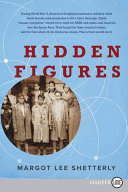
Before John Glenn orbited the earth, or Neil Armstrong walked on the moon, a group of dedicated female mathematicians known as “human computers” used pencils, slide rules and adding machines to calculate the numbers that would launch rockets, and astronauts, into space.
Among these problem-solvers were a group of exceptionally talented African American women, some of the brightest minds of their generation. Originally relegated to teaching math in the South’s segregated public schools, they were called into service during the labor shortages of World War II, when America’s aeronautics industry was in dire need of anyone who had the right stuff. Suddenly, these overlooked math whizzes had a shot at jobs worthy of their skills, and they answered Uncle Sam’s call, moving to Hampton, Virginia and the fascinating, high-energy world of the Langley Memorial Aeronautical Laboratory.
Even as Virginia’s Jim Crow laws required them to be segregated from their white counterparts, the women of Langley’s all-black “West Computing” group helped America achieve one of the things it desired most: a decisive victory over the Soviet Union in the Cold War, and complete domination of the heavens.
Starting in World War II and moving through to the Cold War, the Civil Rights Movement and the Space Race, Hidden Figures follows the interwoven accounts of Dorothy Vaughan, Mary Jackson, Katherine Johnson and Christine Darden, four African American women who participated in some of NASA’s greatest successes. It chronicles their careers over nearly three decades they faced challenges, forged alliances and used their intellect to change their own lives, and their country’s future.
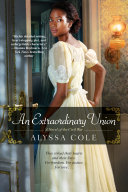
Elle Burns is a former slave with a passion for justice and an eidetic memory. Trading in her life of freedom in Massachusetts, she returns to the indignity of slavery in the South—to spy for the Union Army.
Malcolm McCall is a detective for Pinkerton's Secret Service. Subterfuge is his calling, but he’s facing his deadliest mission yet—risking his life to infiltrate a Rebel enclave in Virginia.
Two undercover agents who share a common cause—and an undeniable attraction—Malcolm and Elle join forces when they discover a plot that could turn the tide of the war in the Confederacy's favor. Caught in a tightening web of wartime intrigue, and fighting a fiery and forbidden love, Malcolm and Elle must make their boldest move to preserve the Union at any cost—even if it means losing each other . . .
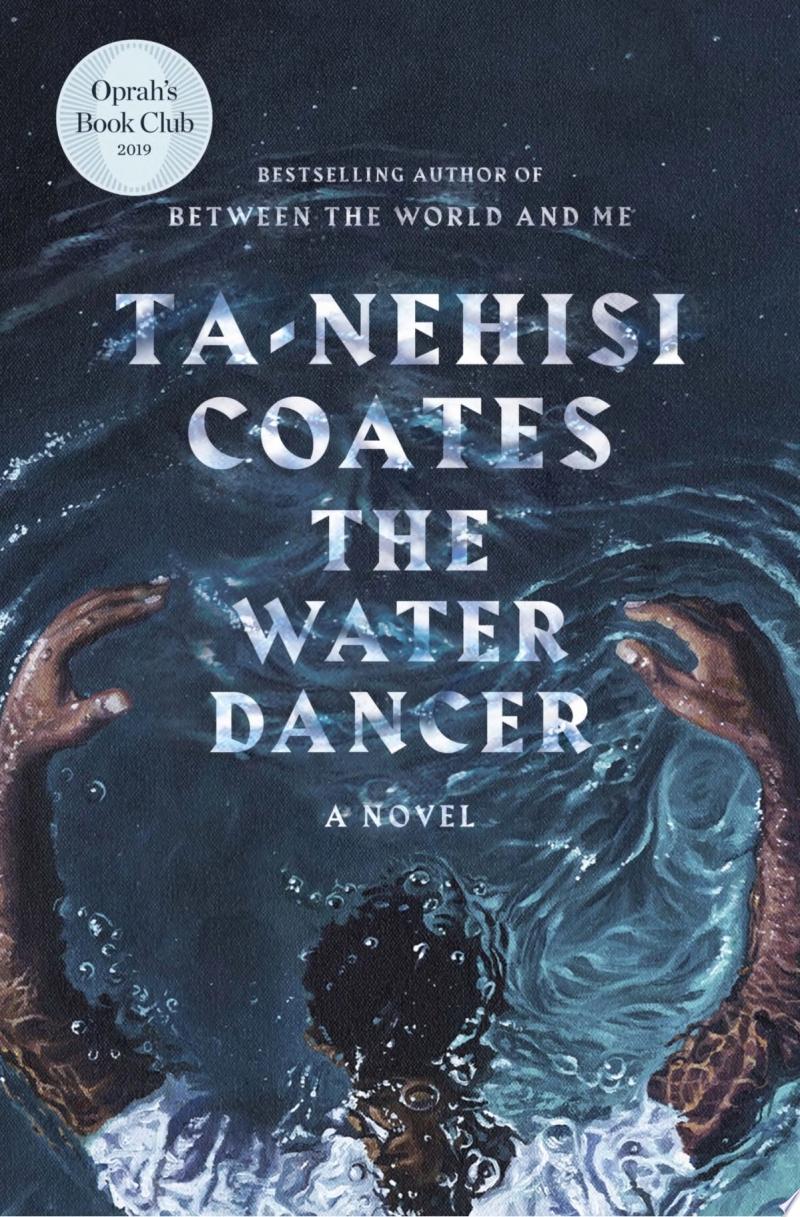
Young Hiram Walker was born into bondage. When his mother was sold away, Hiram was robbed of all memory of her—but was gifted with a mysterious power. Years later, when Hiram almost drowns in a river, that same power saves his life. This brush with death births an urgency in Hiram and a daring scheme: to escape from the only home he’s ever known.
So begins an unexpected journey that takes Hiram from the corrupt grandeur of Virginia’s proud plantations to desperate guerrilla cells in the wilderness, from the coffin of the Deep South to dangerously idealistic movements in the North. Even as he’s enlisted in the underground war between slavers and the enslaved, Hiram’s resolve to rescue the family he left behind endures.
This is the dramatic story of an atrocity inflicted on generations of women, men, and children—the violent and capricious separation of families—and the war they waged to simply make lives with the people they loved. Written by one of today’s most exciting thinkers and writers, The Water Dancer is a propulsive, transcendent work that restores the humanity of those from whom everything was stolen.
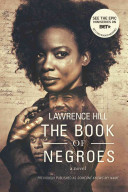
Aminata Diallo, one of the strongest women characters in contemporary fiction, is kidnapped from Africa as a child and sold as a slave in South Carolina. Fleeing to Canada after the Revolutionary War, she escapes to attempt a new life in freedom. The Book of Negroes (based on the novel Someone Knows My Name) will be BET's first miniseries.
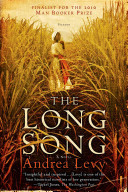
Told in the irresistibly willful and intimate voice of Miss July, with some editorial assistance from her son, Thomas, The Long Song is at once defiant, funny, and shocking. The child of a field slave on the Amity sugar plantation in Jamaica, July lives with her mother until Mrs. Caroline Mortimer, a recently transplanted English widow, decides to move her into the great house and rename her "Marguerite." Together they live through the bloody Baptist War and the violent and chaotic end of slavery.
Resourceful and mischievous, July soon becomes indispensable to her mistress. Together they live through the bloody Baptist war, followed by the violent and chaotic end of slavery. Taught to read and write so that she can help her mistress run the business, July remains bound to the plantation despite her “freedom.” It is the arrival of a young English overseer, Robert Goodwin, that will dramatically change life in the great house for both July and her mistress. Prompted and provoked by her son’s persistent questioning, July’s resilience and heartbreak are gradually revealed in this extraordinarily powerful story of slavery, revolution, freedom, and love.
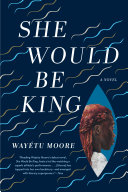
Wayétu Moore’s powerful debut novel, She Would Be King, reimagines the dramatic story of Liberia’s early years through three unforgettable characters who share an uncommon bond. Gbessa, exiled from the West African village of Lai, is starved, bitten by a viper, and left for dead, but still she survives. June Dey, raised on a plantation in Virginia, hides his unusual strength until a confrontation with the overseer forces him to flee. Norman Aragon, the child of a white British colonizer and a Maroon slave from Jamaica, can fade from sight when the earth calls him. When the three meet in the settlement of Monrovia, their gifts help them salvage the tense relationship between the African American settlers and the indigenous tribes, as a new nation forms around them.
Moore’s intermingling of history and magical realism finds voice not just in these three characters but also in the fleeting spirit of the wind, who embodies an ancient wisdom. “If she was not a woman,” the wind says of Gbessa, “she would be king.” In this vibrant story of the African diaspora, Moore, a talented storyteller and a daring writer, illuminates with radiant and exacting prose the tumultuous roots of a country inextricably bound to the United States. She Would Be King is a novel of profound depth set against a vast canvas and a transcendent debut from a major new author.
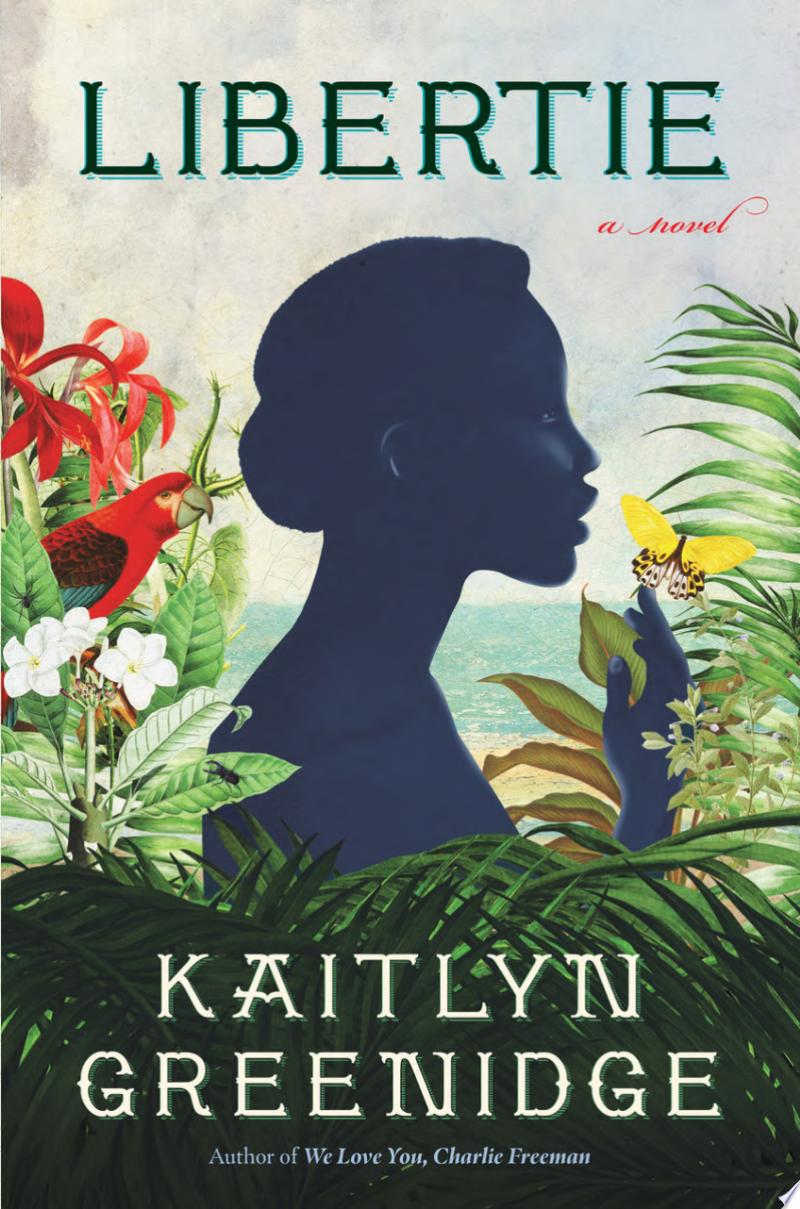
The critically acclaimed and Whiting Award–winning author of We Love You, Charlie Freeman returns with Libertie, an unforgettable story about one young Black girl’s attempt to find a place where she can be fully, and only, herself.
Coming of age in a free Black community in Reconstruction-era Brooklyn, Libertie Sampson is all too aware that her purposeful mother, a practicing physician, has a vision for their future together: Libertie is to go to medical school and practice alongside her. But Libertie, drawn more to music than science, feels stifled by her mother’s choices and is hungry for something else—is there really only one way to have an autonomous life? And she is constantly reminded that, unlike her light-skinned mother, Libertie will not be able to pass for white. When a young man from Haiti proposes to Libertie and promises she will be his equal on the island, she accepts, only to discover that she is still subordinate to him and all men. As she tries to parse what freedom actually means for a Black woman, Libertie struggles with where she might find it—for herself and for generations to come.
Inspired by the life of one of the first Black female doctors in the United States and rich with historical detail, Kaitlyn Greenidge’s new and immersive novel will resonate with readers eager to understand our present through a deep, moving, and lyrical dive into our past.
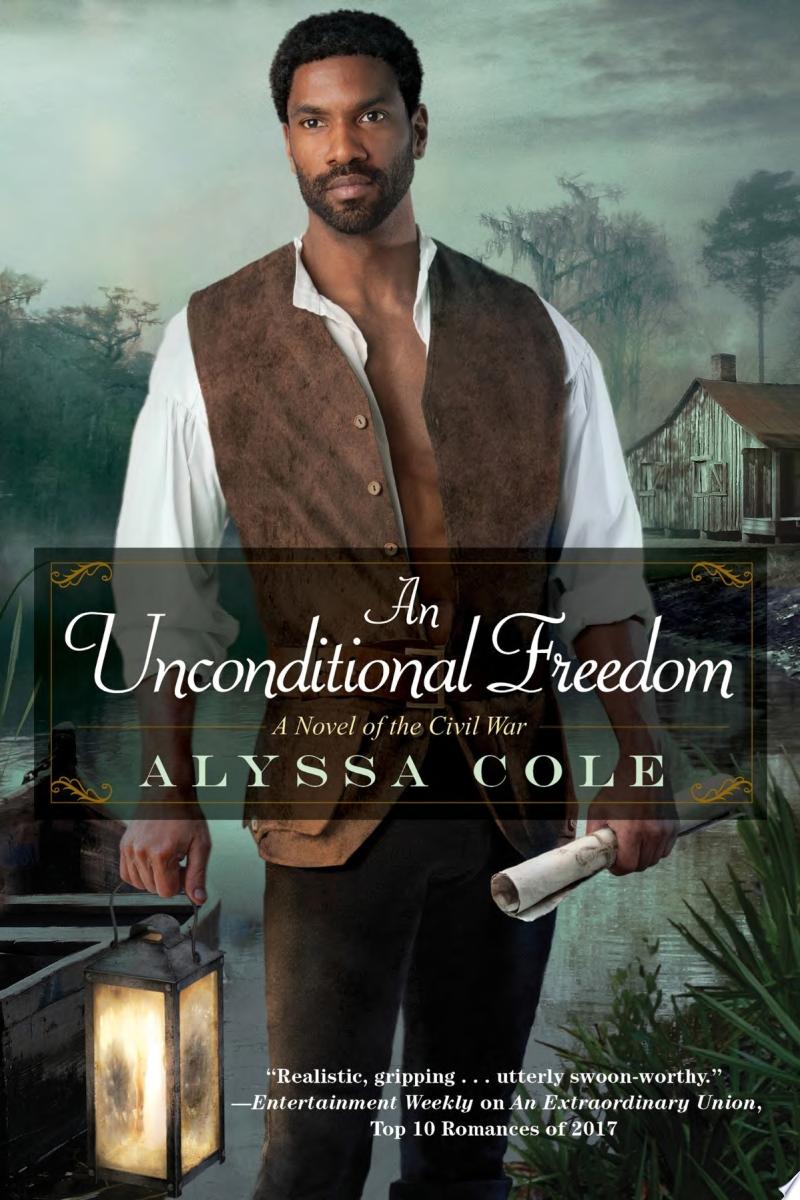
Daniel Cumberland, born free in Massachusetts, studied law with dreams of helping his people—dreams that died the night he was kidnapped and sold into slavery. Daniel is rescued, but he’s a changed man. When he’s offered entry into the Loyal League, the covert organization of Black spies who helped free him, he seizes the opportunity for vengeance against the Confederacy and those who support it.
When the Union Army occupies the Florida home of Cuban Janeta Sanchez, daughter of an enslaved woman and the plantation owner who married her, her family’s wealth does not protect her father from being imprisoned. Under duress and blaming herself for the arrest, Janeta agrees to infiltrate a group called the Loyal League as a double agent—and finds a cause truly worth the sacrifice.
Daniel is aggravated by the headstrong and much too observant new detective he’s paired with, and Janeta is intrigued by the broken but honorable man she is tasked with betraying. As they embark on a mission to intercept Jefferson Davis and thwart European meddling, their dual hidden agendas are threatened by the ghosts of their pasts and a growing affection that could strengthen both the Union and their souls—or lead to their downfall.
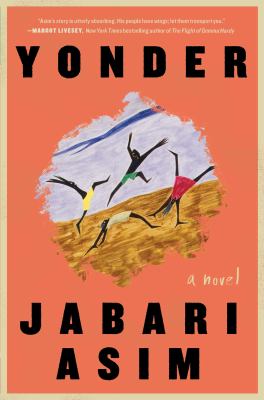
They call themselves the Stolen. Their owners call them captives. They are taught their captors’ tongues and their beliefs but they have a language and rituals all their own.
In a world that would be allegorical if it weren’t saturated in harsh truths, Cato and William meet at Placid Hall, a plantation in an unspecified part of the American South. Subject to the whims of their tyrannical and eccentric captor, Cannonball Greene, they never know what harm may befall them: inhumane physical toil in the plantation’s quarry by day, a beating by night, or the sale of a loved one at any moment. It’s that cruel practice—the wanton destruction of love, the belief that Black people aren’t even capable of loving—that hurts the most.
It hurts the reserved and stubborn William, who finds himself falling for Margaret, a small but mighty woman with self-possession beyond her years. And it hurts Cato, whose first love, Iris, was sold off with no forewarning. He now finds solace in his hearty band of friends, including William, who is like a brother; Margaret; Little Zander; and Milton, a gifted artist. There is also Pandora, with thick braids and long limbs, whose beauty calls to him.
Their relationships begin to fray when a visiting minister with a mysterious past starts to fill their heads with ideas about independence. He tells them that with freedom comes the right to choose the small things—when to dine, when to begin and end work—as well as the big things, such as whom and how to love. Do they follow the preacher and pursue the unknown? Confined in a landscape marked by deceit and uncertainty, who can they trust?
In an elegant work of monumental imagination that will reorient how we think of the legacy of America’s shameful past, Jabari Asim presents a beautiful, powerful, and elegiac novel that examines intimacy and longing in the quarters while asking a vital question: What would happen if an enslaved person risked everything for love?
Kaia Alderson's debut historical fiction novel reveals the untold, true story of the Six Triple Eight, the only all-Black battalion of the Women's Army Corps, who made the dangerous voyage to Europe to ensure American servicemen received word from their loved ones during World War II.
Grace Steele and Eliza Jones may be from completely different backgrounds, but when it comes to the army, specifically the Women's Army Auxiliary Corps (WAAC), they are both starting from the same level. Not only will they be among the first class of female officers the army has even seen, they are also the first Black women allowed to serve.
As these courageous women help to form the 6888th Central Postal Directory Battalion, they are dealing with more than just army bureaucracy--everyone is determined to see this experiment fail. For two northern women, learning to navigate their way through the segregated army may be tougher than boot camp. Grace and Eliza know that there is no room for error; they must be more perfect than everyone else.
When they finally make it overseas, to England and then France, Grace and Eliza will at last be able to do their parts for the country they love, whatever the risk to themselves.
Based on the true story of the 6888th Postal Battalion (the Six Triple Eight), Sisters in Arms explores the untold story of what life was like for the only all-Black, female U.S. battalion to be deployed overseas during World War II.
In this captivating Depression-era set novel by New York Times bestselling author Mary Monroe, two couples find their grudges endangering more than their Alabama small town's deceptive peace . . .
When good-time couple Milton and Yvonne Hamilton moved one house over from the respectable-but-restless Odell and Joyce Watson, it was a fast friendship of shared secrets--and secret jealousies and betrayals. Their alliance was bound to crash and burn, but the Hamiltons won't quite let the flame die out, even after scandalous accusations get them arrested...
Odell would do anything to be free of his bootlegging, blackmailing, money extorting neighbors and recover the peaceful--and financially prosperous--life he and Joyce once had. But Milton and Yvonne seem to always bounce back from bad luck, and this time they've returned angrier, and greedier, than ever. Determined to get what Odell "owes" them, the Hamiltons have a big surprise for Joyce too, one that shows how far they will go to get revenge . . .
Now pushed past his breaking point, Odell is sure he's got a foolproof plan to end the scheming once and for all. But it soon spirals into lies, shattering violence, and permanent damage that will roil their tranquil community, and alter his and Joyce's world forever . . .
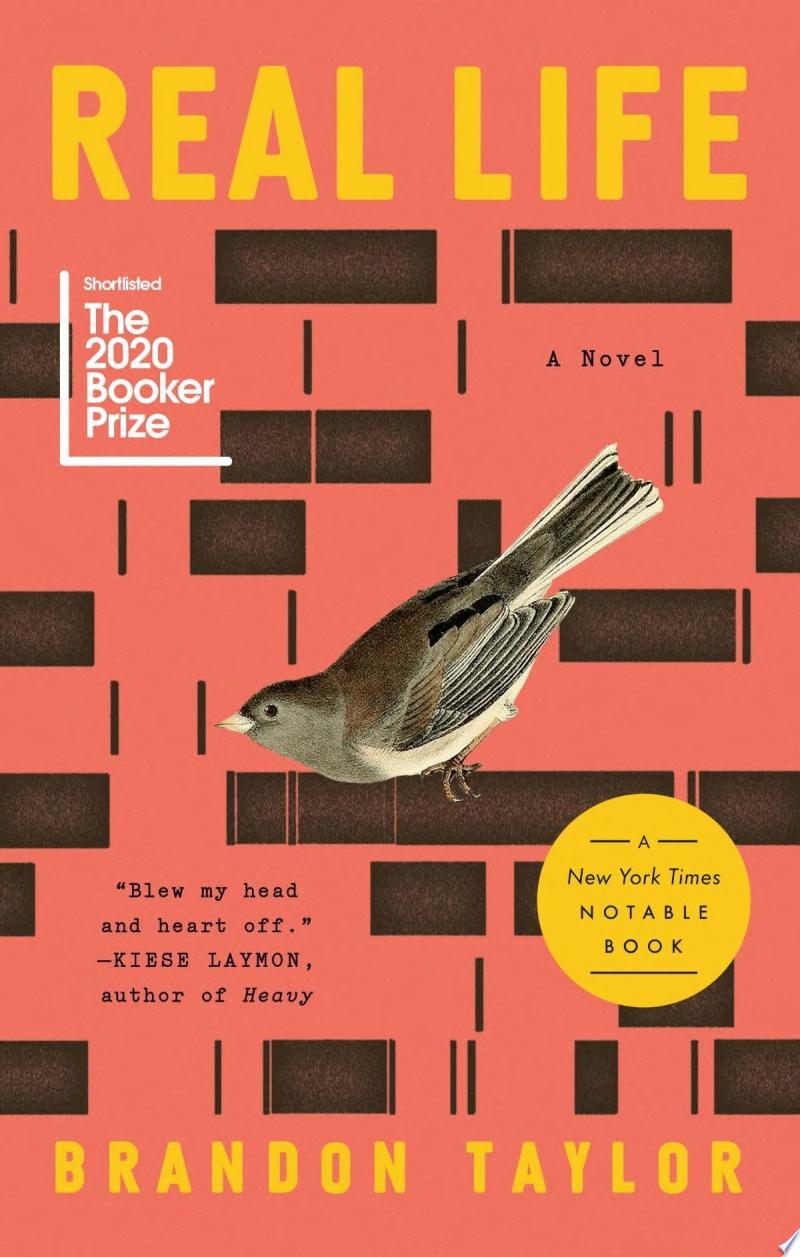
Almost everything about Wallace is at odds with the Midwestern university town where he is working uneasily toward a biochem degree. An introverted young man from Alabama, black and queer, he has left behind his family without escaping the long shadows of his childhood. For reasons of self-preservation, Wallace has enforced a wary distance even within his own circle of friends—some dating each other, some dating women, some feigning straightness. But over the course of a late-summer weekend, a series of confrontations with colleagues, and an unexpected encounter with an ostensibly straight, white classmate, conspire to fracture his defenses while exposing long-hidden currents of hostility and desire within their community.
Real Life is a novel of profound and lacerating power, a story that asks if it’s ever really possible to overcome our private wounds, and at what cost.
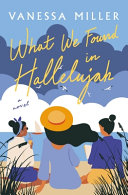
Good things never happen in November--at least not for the Reynolds women. It was the month they lost their patriarch. And the month when fourteen-year-old Trinity went missing during a tropical storm. So Hope Reynolds isn't surprised when it becomes the month she walks in on her boyfriend kissing another woman. Or when she receives a panicked call from her mother about a mistake that could cost the family their treasured beach house.
Meanwhile, Faith Reynolds-Phillips is facing her own financial struggles. She's also looking down the barrel of divorce and raising a daughter who reminds her so much of her younger sister, Trinity, that sometimes it physically hurts. The last place Hope and Faith want to be is in Hallelujah, South Carolina, during hurricane season. Going home will force them to confront the secrets that have torn their family apart. But if they can survive another storm, they'll have a chance to rebuild on a new foundation--the truth.
In the latest novel from prolific writer Vanessa Miller, three women must find the strength to endure the storm and the faith to believe in a miracle.
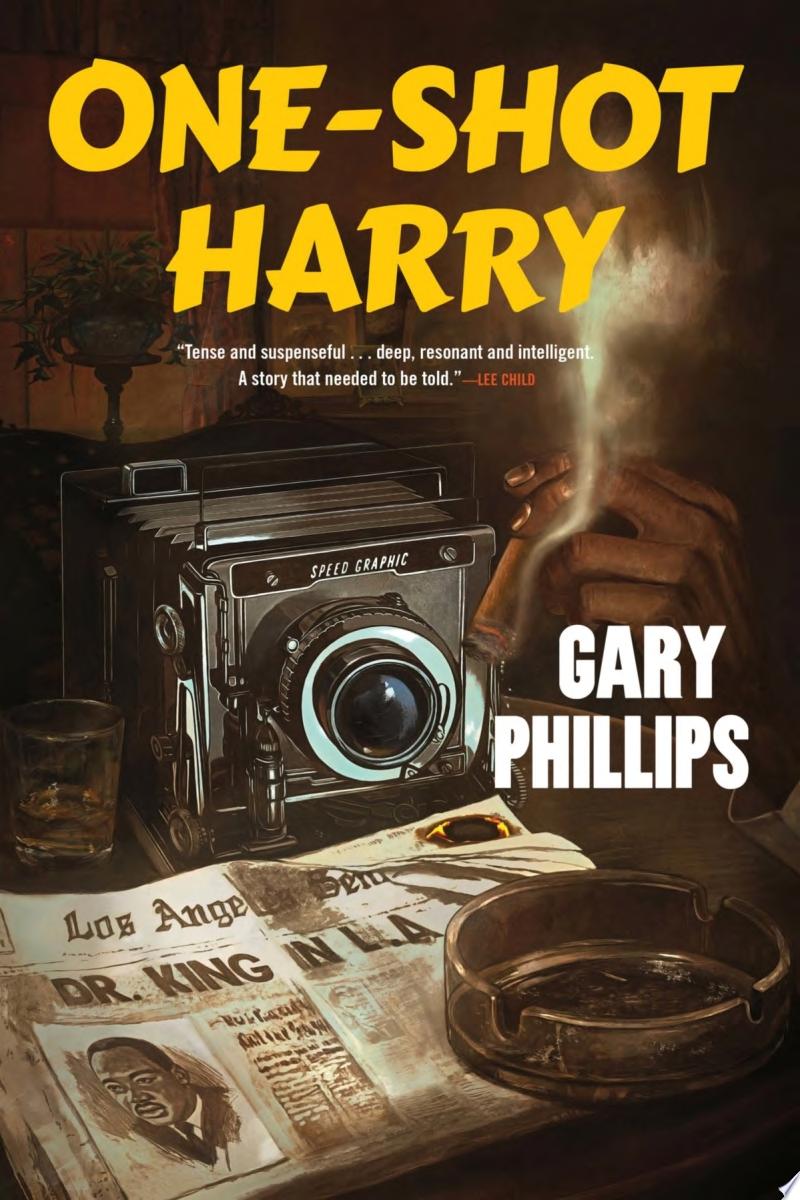
LOS ANGELES, 1963: Korean War veteran Harry Ingram earns a living as a news photographer and occasional process server: chasing police radio calls and dodging baseball bats. With racial tensions running high on the eve of Martin Luther King’s Freedom Rally, Ingram risks becoming a victim at every crime scene he photographs.
When Ingram hears about a deadly automobile accident on his police scanner, he recognizes the vehicle described as belonging to his good friend and old army buddy, a white jazz trumpeter. The LAPD declares the car crash an accident, but when Ingram develops his photos, he sees signs of foul play. Ingram feels compelled to play detective, even if it means putting his own life on the line. Armed with his wits, his camera, and occasionally his Colt .45, “One-Shot” Harry plunges headfirst into the seamy underbelly of LA society, tangling with racists, leftists, gangsters, zealots, and lovers as he attempts to solve the mystery.
Master storyteller and crime fiction legend Gary Phillips has filled the pages of One-Shot Harry with fascinating historical cameos, wise-cracks, tenderness, and an edge-of-your-seat thrill ride of a plot with consequences far beyond one dead body.
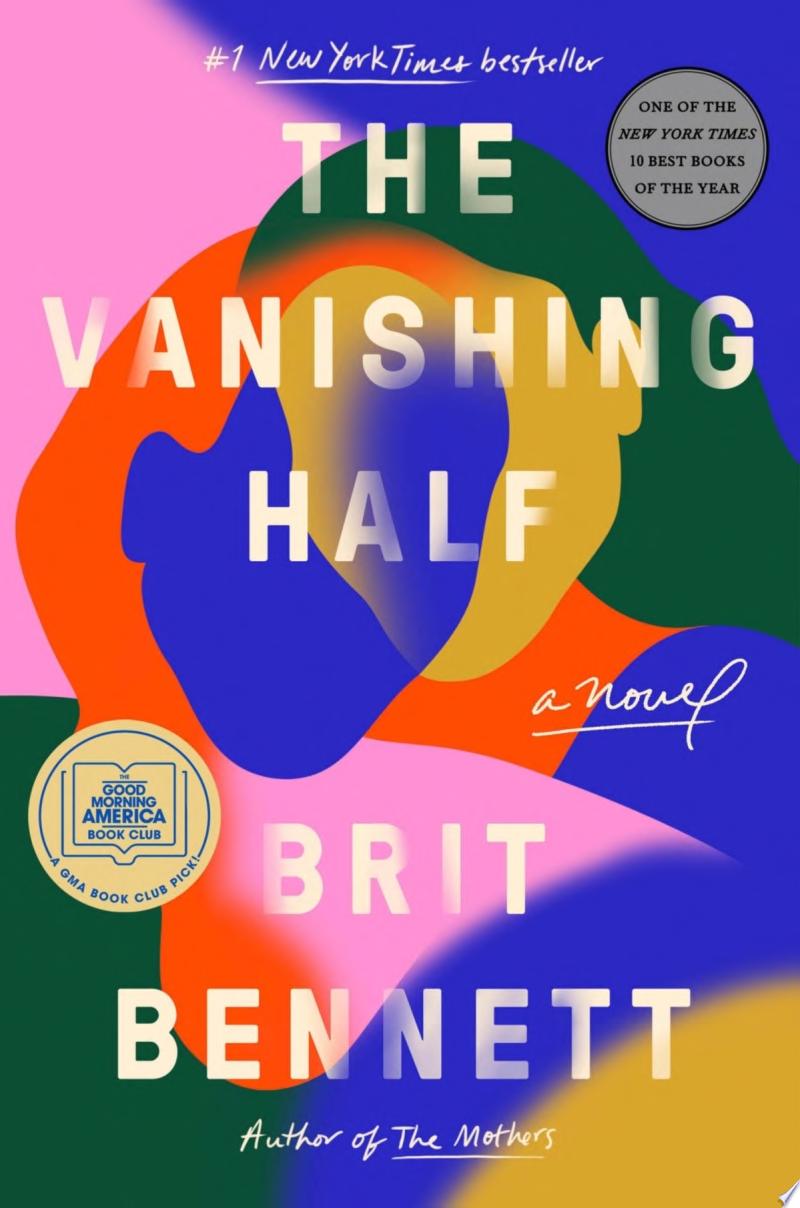
The Vignes twin sisters will always be identical. But after growing up together in a small, southern black community and running away at age sixteen, it's not just the shape of their daily lives that is different as adults, it's everything: their families, their communities, their racial identities. Many years later, one sister lives with her black daughter in the same southern town she once tried to escape. The other secretly passes for white, and her white husband knows nothing of her past. Still, even separated by so many miles and just as many lies, the fates of the twins remain intertwined. What will happen to the next generation, when their own daughters' storylines intersect?
Weaving together multiple strands and generations of this family, from the Deep South to California, from the 1950s to the 1990s, Brit Bennett produces a story that is at once a riveting, emotional family story and a brilliant exploration of the American history of passing. Looking well beyond issues of race, The Vanishing Half considers the lasting influence of the past as it shapes a person's decisions, desires, and expectations, and explores some of the multiple reasons and realms in which people sometimes feel pulled to live as something other than their origins.
As with her New York Times-bestselling debut The Mothers, Brit Bennett offers an engrossing page-turner about family and relationships that is immersive and provocative, compassionate and wise.
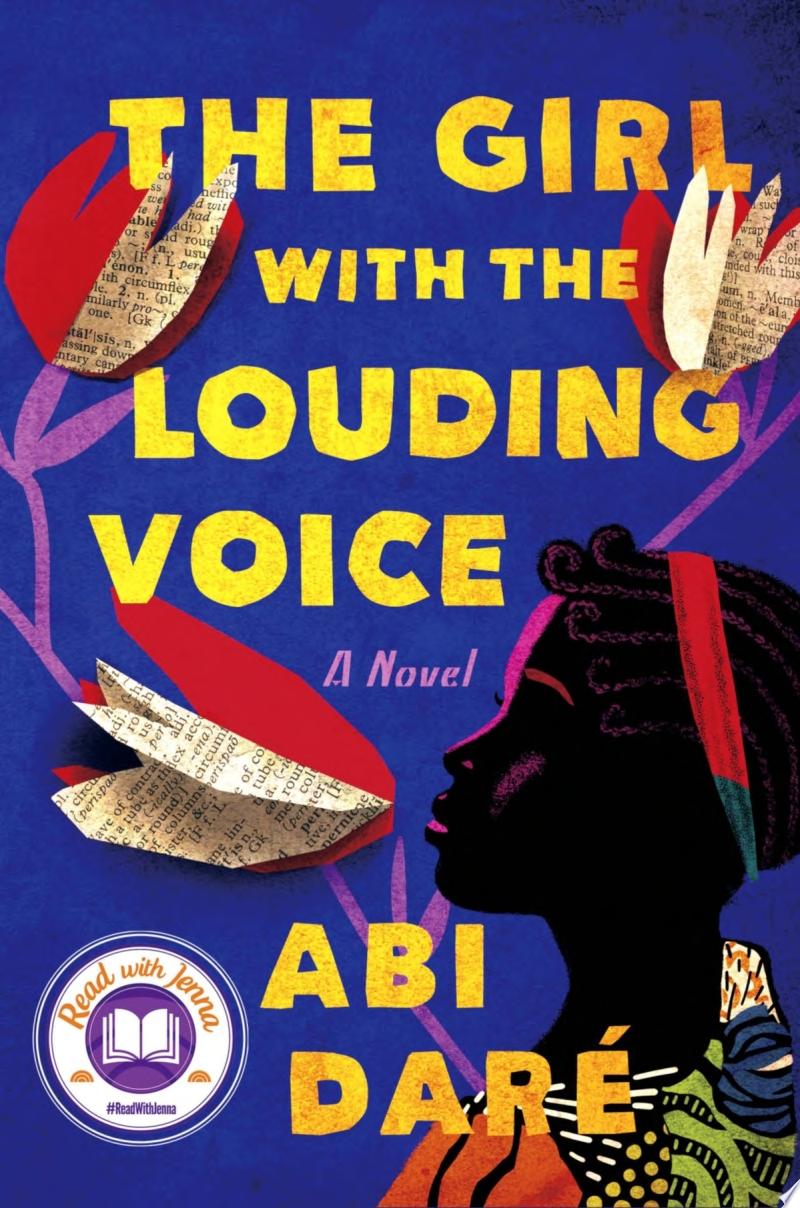
The unforgettable, inspiring story of a teenage girl growing up in a rural Nigerian village who longs to get an education so that she can find her “louding voice” and speak up for herself, The Girl with the Louding Voice is a simultaneously heartbreaking and triumphant tale about the power of fighting for your dreams. Despite the seemingly insurmountable obstacles in her path, Adunni never loses sight of her goal of escaping the life of poverty she was born into so that she can build the future she chooses for herself – and help other girls like her do the same. Her spirited determination to find joy and hope in even the most difficult circumstances imaginable will “break your heart and then put it back together again” (Jenna Bush Hager on The Today Show) even as Adunni shows us how one courageous young girl can inspire us all to reach for our dreams…and maybe even change the world.
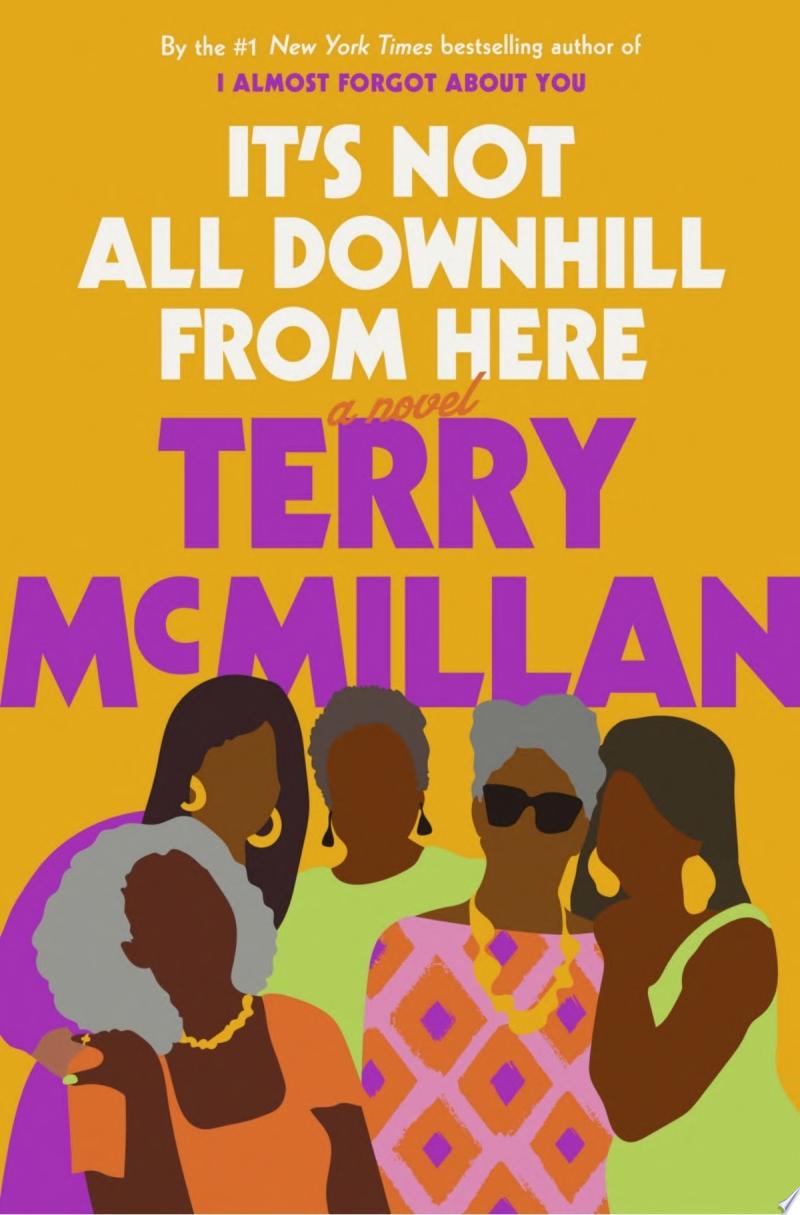
Loretha Curry’s life is full. A little crowded sometimes, but full indeed. On the eve of her sixty-eighth birthday, she has a booming beauty-supply empire, a gaggle of lifelong friends, and a husband whose moves still surprise. True, she’s carrying a few more pounds than she should be, but Loretha is not one of those women who think her best days are behind her—and she’s determined to prove wrong her mother, her twin sister, and everyone else with that outdated view of aging wrong. It’s not all downhill from here.
But when an unexpected loss turns her world upside down, Loretha will have to summon all her strength, resourcefulness, and determination to keep on thriving, pursue joy, heal old wounds, and chart new paths. With a little help from her friends, of course.
Serena, Michelle, Kenya, and Lynette have been best friends since they were small children. And as sister friends forever, they have always been there for one another, through good times and bad, no matter what.
This year is a crucial turning point for each woman. Serena, still single, is questioning why love hasn't found her yet. Michelle is engaged and ready to walk down the aisle--until an old flame strolls back into her life. Kenya is happily married, but at the same time, her husband's ex-wife won't allow them or their family to live in peace. And Lynette's divorce from her cheating husband has her nervously dating for the first time in well over a decade.
During this difficult period, their friendship will be tested like never before. Yet it is that sisterly love that they will need . . . more than ever.
When Otto and Xavier Shin declare their love, an aunt gifts them a trip on a sleeper train to mark their new commitment—and to get them out of her house. Setting off with their pet mongoose, Otto and Xavier arrive at their sleepy local train station, but quickly deduce that The Lucky Day is no ordinary locomotive. Their trip on this former tea-smuggling train has been curated beyond their wildest imaginations, complete with mysterious and welcoming touches, like ingredients for their favorite breakfast. They seem to be the only people on board, until Otto discovers a secretive woman who issues a surprising message. As further clues and questions pile up, and the trip upends everything they thought they knew, Otto and Xavier begin to see connections to their own pasts, connections that now bind them together.
A spellbinding tale from a star author, Peaces is about what it means to be seen by another person—whether it’s your lover or a stranger on a train—and what happens when things you thought were firmly in the past turn out to be right beside you.
The unforgettable New York Times best seller begins with the story of two half-sisters, separated by forces beyond their control: one sold into slavery, the other married to a British slaver. Written with tremendous sweep and power, Homegoing traces the generations of family who follow, as their destinies lead them through two continents and three hundred years of history, each life indeliably drawn, as the legacy of slavery is fully revealed in light of the present day.
Effia and Esi are born into different villages in eighteenth-century Ghana. Effia is married off to an Englishman and lives in comfort in the palatial rooms of Cape Coast Castle. Unbeknownst to Effia, her sister, Esi, is imprisoned beneath her in the castle’s dungeons, sold with thousands of others into the Gold Coast’s booming slave trade, and shipped off to America, where her children and grandchildren will be raised in slavery. One thread of Homegoing follows Effia’s descendants through centuries of warfare in Ghana, as the Fante and Asante nations wrestle with the slave trade and British colonization. The other thread follows Esi and her children into America. From the plantations of the South to the Civil War and the Great Migration, from the coal mines of Pratt City, Alabama, to the jazz clubs and dope houses of twentieth-century Harlem, right up through the present day, Homegoing makes history visceral, and captures, with singular and stunning immediacy, how the memory of captivity came to be inscribed in the soul of a nation.
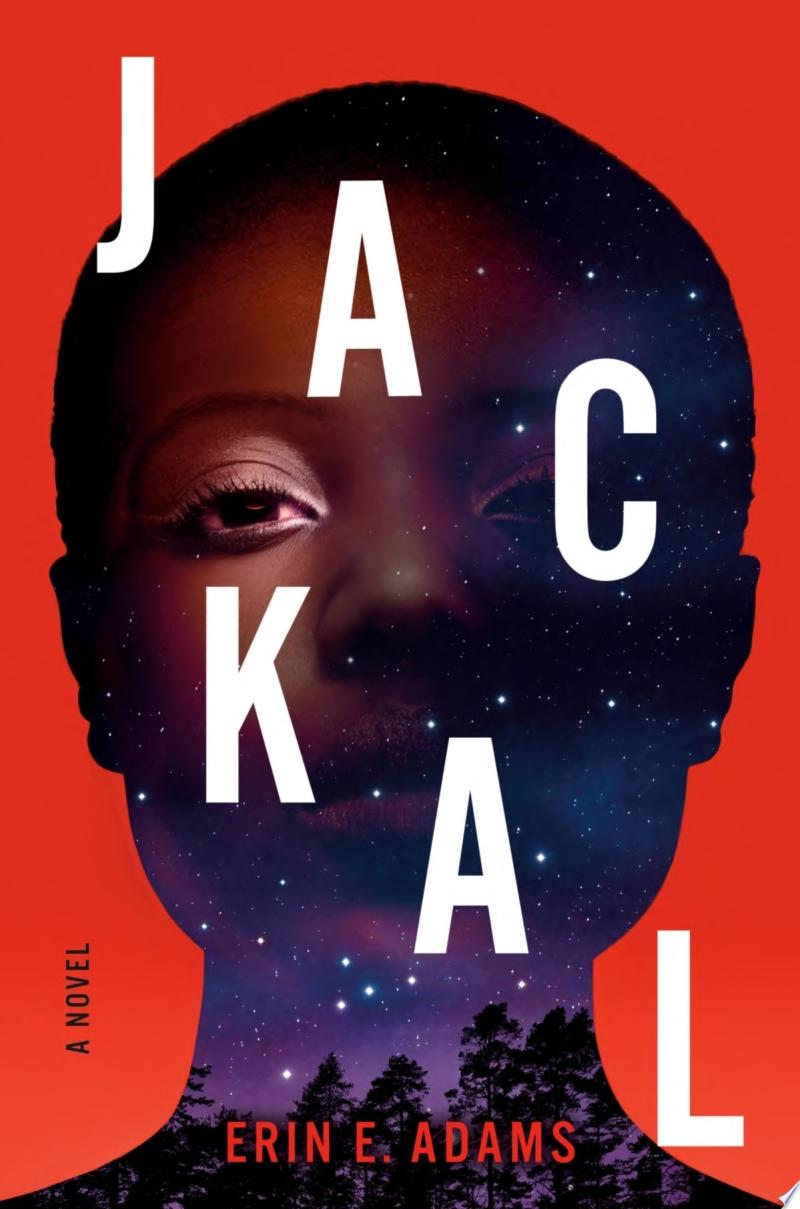
A young Black girl goes missing in the woods outside her white rust belt town. But she's not the first—and she may not be the last. . . .
It’s watching.
Liz Rocher is coming home . . . reluctantly. As a Black woman, Liz doesn’t exactly have fond memories of Johnstown, Pennsylvania, a predominantly white town. But her best friend is getting married, so she braces herself for a weekend of awkward, passive-aggressive reunions. Liz has grown, though; she can handle whatever awaits her. But on the day of the wedding, somewhere between dancing and dessert, the couple’s daughter, Caroline, disappears—and the only thing left behind is a piece of white fabric covered in blood.
It’s taking.
As a frantic search begins, with the police combing the trees for Caroline, Liz is the only one who notices a pattern: A summer night. A missing girl. A party in the woods. She’s seen this before. Keisha Woodson, the only other Black girl in Liz’s high school, walked into the woods with a mysterious man and was later found with her chest cavity ripped open and her heart removed. Liz shudders at the thought that it could have been her, and now, with Caroline missing, it can’t be a coincidence. As Liz starts to dig through the town’s history, she uncovers a horrifying secret about the place she once called home. Children have been going missing in these woods for years. All of them Black. All of them girls.
It’s your turn.
With the evil in the forest creeping closer, Liz knows what she must do: find Caroline, or be entirely consumed by the darkness.
An unexpected inheritance gives Greg Heffley's family a chance to make big changes to their house. But they soon find that home improvement isn't all it's cracked up to be.
Once the walls come down, all sorts of problems start to crop up. Rotten wood, toxic mold, unwelcome critters, and something even more sinister all make Greg and his family wonder if the renovations are worth the trouble. When the dust finally settles, will the Heffleys be able to stay . . . or will they need to get out of town?
Greg Heffley and his family are getting out of town. With the cold weather and the stress of the approaching holiday season, the Heffleys decide to escape to a tropical island resort for some much-needed rest and relaxation. A few days in paradise should do wonders for Greg and his frazzled family. But the Heffleys soon discover that paradise isn't everything it's cracked up to be. Sun poisoning, stomach troubles, and venomous critters all threaten to ruin the family's vacation. Can their trip be saved, or will this island getaway end in disaster?
It’s summer vacation, the weather’s great, and all the kids are having fun outside. So where’s Greg Heffley? Inside his house, playing video games with the shades drawn.
Greg, a self-confessed “indoor person,” is living out his ultimate summer fantasy: no responsibilities and no rules. But Greg’s mom has a different vision for an ideal summer . . . one packed with outdoor activities and “family togetherness.” Whose vision will win out? Or will a new addition to the Heffley family change everything?
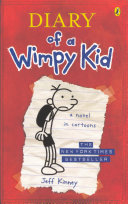
It's a new school year, and Greg Heffley finds himself thrust into middle school, where undersized weaklings share the hallways with kids who are taller, meaner, and already shaving. The hazards of growing up before you're ready are uniquely revealed through words and drawings as Greg records them in his diary. In book one of this debut series, Greg is happy to have Rowley, his sidekick, along for the ride. But when Rowley's star starts to rise, Greg tries to use his best friend's newfound popularity to his own advantage, kicking off a chain of events that will test their friendship in hilarious fashion.
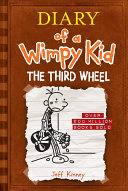
Greg Heffley is not willing to be the odd man out. A dance at Greg's middle school has everyone scrambling to find a partner, and Greg is determined not to be left by the wayside. So he concocts a desperate plan to find someone--anyone!--to go with on the big night. But Greg's schemes go hilariously awry, and his only option is to attend the dance with his best friend, Rowley Jefferson, and a female classmate as a "group of friends." But the night is long, and anything can happen along the way. Who will arrive at the dance triumphantly, and who will end up being the third wheel?
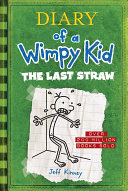
Let's face it: Greg Heffley will never change his wimpy ways. Somebody just needs to explain that to Greg's father. You see, Frank Heffley actually thinks he can get his son to toughen up, and he enlists Greg in organized sports and other "manly" endeavors. Of course, Greg is able to easily sidestep his father's efforts to change him. But when Greg's dad threatens to send him to military academy, Greg realizes he has to shape up . . . or get shipped out.
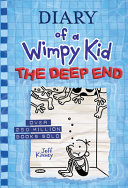
Greg Heffley and his family hit the road for a cross-country camping trip, ready for the adventure of a lifetime. But things take an unexpected turn, and they find themselves stranded at an RV park that's not exactly a summertime paradise. When the skies open up and the water starts to rise, the Heffleys wonder if they can save their vacation--or if they're already in too deep.

Greg Heffley has always been in a hurry to grow up. But is getting older really all it's cracked up to be? Greg suddenly finds himself dealing with the pressures of boy-girl parties, increased responsibilities, and even the awkward changes that come with getting older--all without his best friend, Rowley, at his side. Can Greg make it through on his own? Or will he have to face the "ugly truth"?
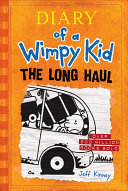
A family road trip is supposed to be a lot of fun . . . unless, of course, you're the Heffleys. The journey starts off full of promise, then quickly takes several wrong turns. Gas station bathrooms, crazed seagulls, a fender bender, and a runaway pig--not exactly Greg Heffley's idea of a good time. But even the worst road trip can turn into an adventure--and this is one the Heffleys won't soon forget.
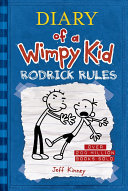
Secrets have a way of getting out, especially when a diary is involved. Whatever you do, don’t ask Greg Heffley how he spent his summer vacation, because he definitely doesn’t want to talk about it. As Greg enters the new school year, he’s eager to put the past three months behind him . . . and one event in particular. Unfortunately for Greg, his older brother, Rodrick, knows all about the incident Greg wants to keep under wraps. But secrets have a way of getting out . . . especially when a diary is involved.
Diary of a Wimpy Kid: Rodrick Rules chronicles Greg’s attempts to navigate the hazards of middle school, impress the girls, steer clear of the school talent show, and most important, keep his secret safe.

"After a disastrous field day competition at school, Greg decides that when it comes to his athletic career, he's officially retired. But after his mom urges him to give sports one more chance, he reluctantly agrees to sign up for basketball. Tryouts are a mess, and Greg is sure he won't make the cut. But he unexpectedly lands a spot on the worst team. As Greg and his new teammates start the season, their chances of winning even a single game look slim. But in sports, anything can happen. When everything is on the line and the ball is in Greg's hands, will he rise to the occasion? Or will he blow his big shot?"--
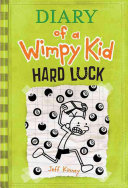
Greg Heffley's on a losing streak. His best friend, Rowley Jefferson, has ditched him, and finding new friends in middle school is proving to be a tough task. To change his fortunes, Greg decides to take a leap of faith and turn his decisions over to chance. Will a roll of the dice turn things around, or is Greg's life destined to be just another hard-luck story?
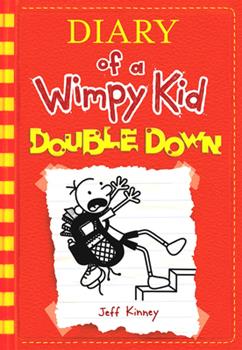
The pressure’s really piling up on Greg Heffley. His mom thinks video games are turning his brain to mush, so she wants her son to put down the controller and explore his “creative side.”
As if that’s not scary enough, Halloween’s just around the corner and the frights are coming at Greg from every angle.
When Greg discovers a bag of gummy worms, it sparks an idea. Can he get his mom off his back by making a movie . . . and will he become rich and famous in the process? Or will doubling down on this plan just double Greg’s troubles?
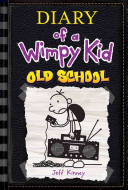
Life was better in the old days. Or was it?
That's the question Greg Heffley is asking as his town voluntarily unplugs and goes electronics-free. But modern life has its conveniences, and Greg isn't cut out for an old-fashioned world.
With tension building inside and outside the Heffley home, will Greg find a way to survive? Or is going "old school" just too hard for a kid like Greg?
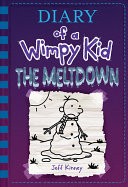
When snow shuts down Greg Heffley's middle school, his neighborhood transforms into a wintry battlefield. Rival groups fight over territory, build massive snow forts, and stage epic snowball fights. And in the crosshairs are Greg and his trusty best friend, Rowley Jefferson.
It's a fight for survival as Greg and Rowley navigate alliances, betrayals, and warring gangs in a neighborhood meltdown. When the snow clears, will Greg and Rowley emerge as heroes? Or will they even survive to see another day?
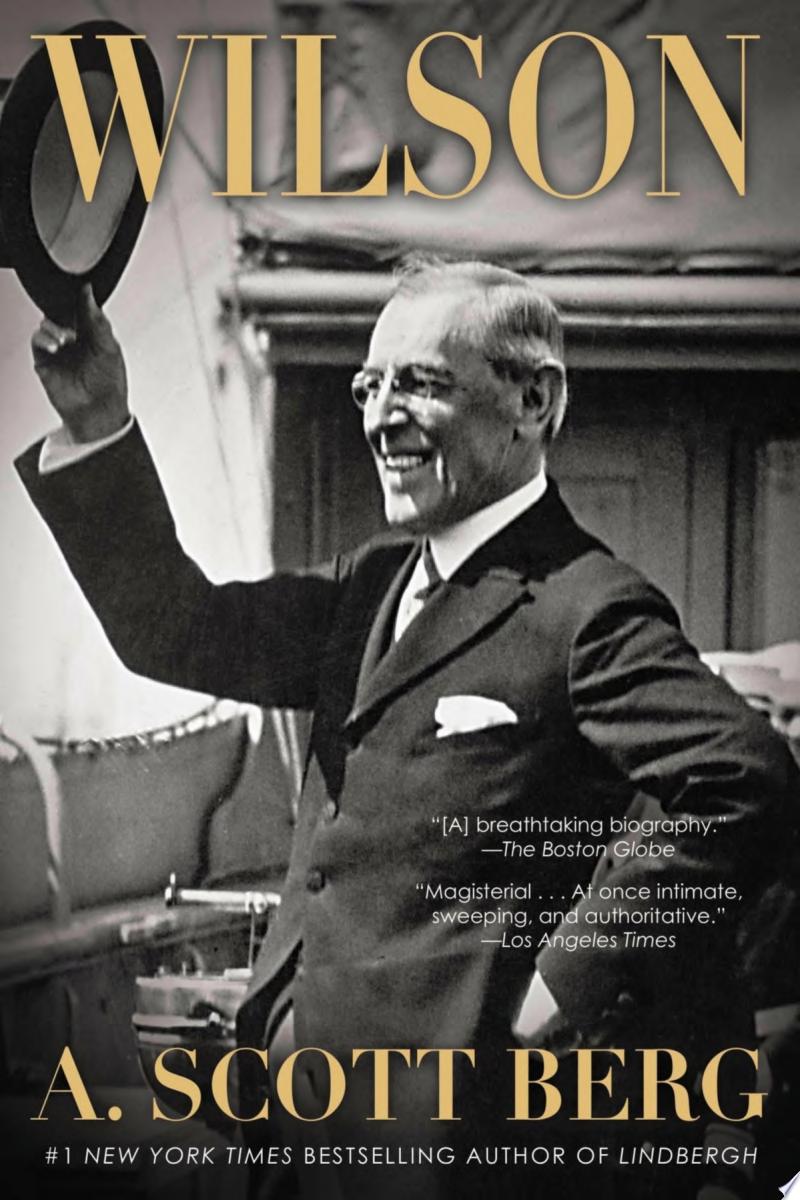
One hundred years after his inauguration, Woodrow Wilson still stands as one of the most influential figures of the twentieth century, and one of the most enigmatic. And now, after more than a decade of research and writing, Pulitzer Prize–winning author A. Scott Berg has completed Wilson—the most personal and penetrating biography ever written about the twenty-eighth President.
In addition to the hundreds of thousands of documents in the Wilson Archives, Berg was the first biographer to gain access to two recently discovered caches of papers belonging to those close to Wilson. From this material, Berg was able to add countless details—even several unknown events—that fill in missing pieces of Wilson’s character, and cast new light on his entire life.
From the visionary Princeton professor who constructed a model for higher education in America to the architect of the ill-fated League of Nations, from the devout Commander in Chief who ushered the country through its first great World War to the widower of intense passion and turbulence who wooed a second wife with hundreds of astonishing love letters, from the idealist determined to make the world “safe for democracy” to the stroke-crippled leader whose incapacity—and the subterfuges around it—were among the century’s greatest secrets, from the trailblazer whose ideas paved the way for the New Deal and the Progressive administrations that followed to the politician whose partisan battles with his opponents left him a broken man, and ultimately, a tragic figure—this is a book at once magisterial and deeply emotional about the whole of Wilson’s life, accomplishments, and failings. This is not just Wilson the icon—but Wilson the man.
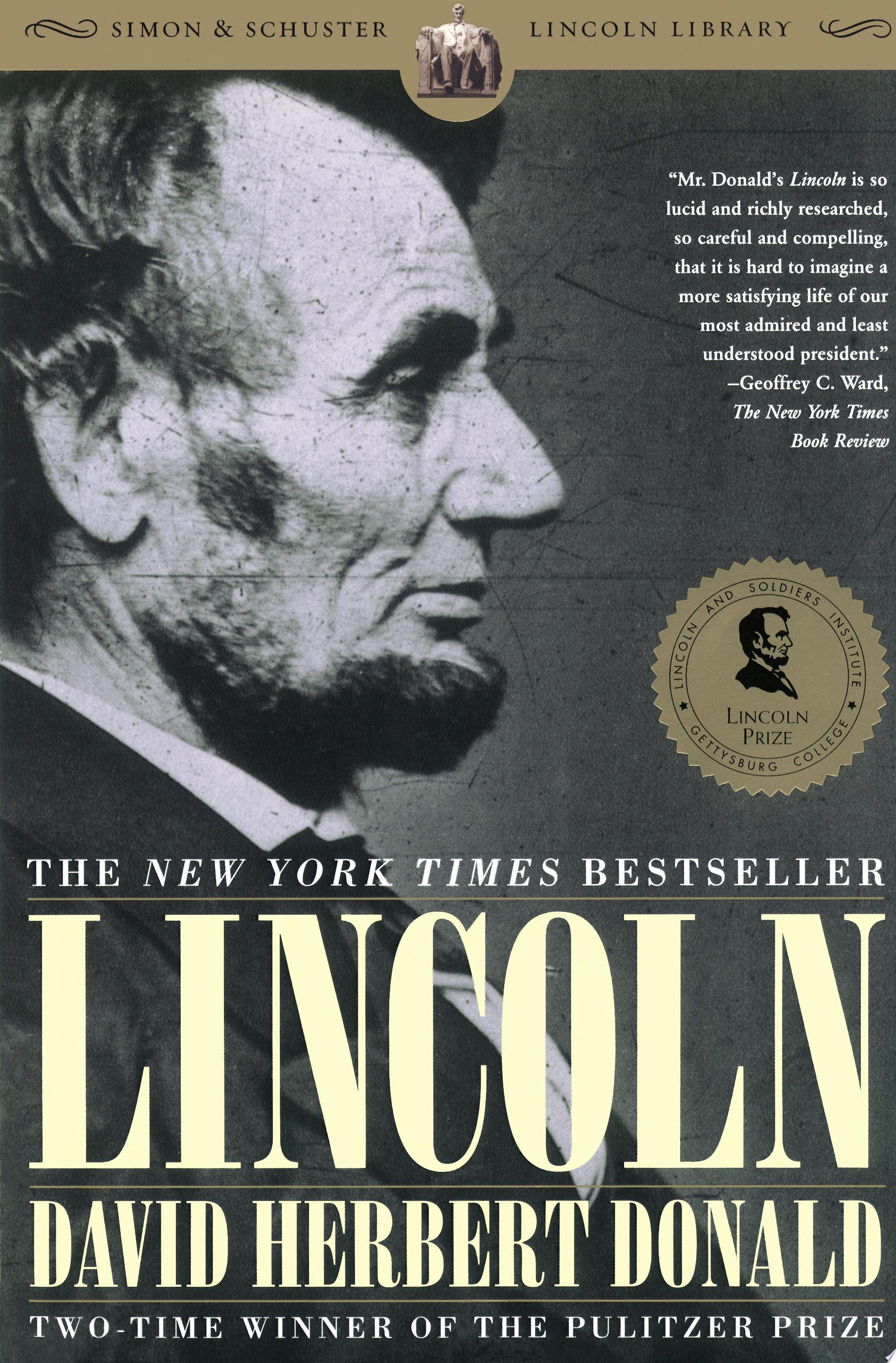
Donald brilliantly depicts Lincoln’s gradual ascent from humble beginnings in rural Kentucky to the ever-expanding political circles in Illinois, and finally to the presidency of a country divided by civil war. Donald goes beyond biography, illuminating the gradual development of Lincoln’s character, chronicling his tremendous capacity for evolution and growth, thus illustrating what made it possible for a man so inexperienced and so unprepared for the presidency to become a great moral leader. In the most troubled of times, here was a man who led the country out of slavery and preserved a shattered Union—in short, one of the greatest presidents this country has ever seen.
Ulysses S. Grant's life has typically been misunderstood. All too often he is caricatured as a chronic loser and an inept businessman, or as the triumphant but brutal Union general of the Civil War. But these stereotypes don't come close to capturing him, as Chernow shows in his masterful biography, the first to provide a complete understanding of the general and president whose fortunes rose and fell with dizzying speed and frequency.
Before the Civil War, Grant was flailing. His business ventures had ended dismally, and despite distinguished service in the Mexican War he ended up resigning from the army in disgrace amid recurring accusations of drunkenness. But in war, Grant began to realize his remarkable potential, soaring through the ranks of the Union army, prevailing at the battle of Shiloh and in the Vicksburg campaign, and ultimately defeating the legendary Confederate general Robert E. Lee. Along the way, Grant endeared himself to President Lincoln and became his most trusted general and the strategic genius of the war effort. Grant’s military fame translated into a two-term presidency, but one plagued by corruption scandals involving his closest staff members.
More important, he sought freedom and justice for black Americans, working to crush the Ku Klux Klan and earning the admiration of Frederick Douglass, who called him “the vigilant, firm, impartial, and wise protector of my race.” After his presidency, he was again brought low by a dashing young swindler on Wall Street, only to resuscitate his image by working with Mark Twain to publish his memoirs, which are recognized as a masterpiece of the genre.
With lucidity, breadth, and meticulousness, Chernow finds the threads that bind these disparate stories together, shedding new light on the man whom Walt Whitman described as “nothing heroic... and yet the greatest hero.” Chernow’s probing portrait of Grant's lifelong struggle with alcoholism transforms our understanding of the man at the deepest level. This is America's greatest biographer, bringing movingly to life one of our finest but most underappreciated presidents. The definitive biography, Grant is a grand synthesis of painstaking research and literary brilliance that makes sense of all sides of Grant's life, explaining how this simple Midwesterner could at once be so ordinary and so extraordinary.

In this extraordinary volume, Jean Edward Smith presents a portrait of Dwight D. Eisenhower that is as full, rich, and revealing as anything ever written about America’s thirty-fourth president. Here is Eisenhower the young dreamer, charting a course from Abilene, Kansas, to West Point and beyond. Drawing on a wealth of untapped primary sources, Smith provides new insight into Ike’s maddening apprenticeship under Douglas MacArthur. Then the whole panorama of World War II unfolds, with Eisenhower’s superlative generalship forging the Allied path to victory. Smith also gives us an intriguing examination of Ike’s finances, details his wartime affair with Kay Summersby, and reveals the inside story of the 1952 Republican convention that catapulted him to the White House.
Smith’s chronicle of Eisenhower’s presidential years is as compelling as it is comprehensive. Derided by his detractors as a somnambulant caretaker, Eisenhower emerges in Smith’s perceptive retelling as both a canny politician and a skillful, decisive leader. He managed not only to keep the peace, but also to enhance America’s prestige in the Middle East and throughout the world.
Unmatched in insight, Eisenhower in War and Peace at last gives us an Eisenhower for our time—and for the ages.
Andrew Jackson, his intimate circle of friends, and his tumultuous times are at the heart of this remarkable book about the man who rose from nothing to create the modern presidency. Beloved and hated, venerated and reviled, Andrew Jackson was an orphan who fought his way to the pinnacle of power, bending the nation to his will in the cause of democracy. Jackson’s election in 1828 ushered in a new and lasting era in which the people, not distant elites, were the guiding force in American politics. Democracy made its stand in the Jackson years, and he gave voice to the hopes and the fears of a restless, changing nation facing challenging times at home and threats abroad. To tell the saga of Jackson’s presidency, acclaimed author Jon Meacham goes inside the Jackson White House. Drawing on newly discovered family letters and papers, he details the human drama–the family, the women, and the inner circle of advisers– that shaped Jackson’s private world through years of storm and victory.
One of our most significant yet dimly recalled presidents, Jackson was a battle-hardened warrior, the founder of the Democratic Party, and the architect of the presidency as we know it. His story is one of violence, sex, courage, and tragedy. With his powerful persona, his evident bravery, and his mystical connection to the people, Jackson moved the White House from the periphery of government to the center of national action, articulating a vision of change that challenged entrenched interests to heed the popular will– or face his formidable wrath. The greatest of the presidents who have followed Jackson in the White House–from Lincoln to Theodore Roosevelt to FDR to Truman–have found inspiration in his example, and virtue in his vision.
Jackson was the most contradictory of men. The architect of the removal of Indians from their native lands, he was warmly sentimental and risked everything to give more power to ordinary citizens. He was, in short, a lot like his country: alternately kind and vicious, brilliant and blind; and a man who fought a lifelong war to keep the republic safe–no matter what it took.

Jonathan Alter tells the epic story of an enigmatic man of faith and his improbable journey from barefoot boy to global icon. Alter paints an intimate and surprising portrait of the only president since Thomas Jefferson who can fairly be called a Renaissance Man, a complex figure—ridiculed and later revered—with a piercing intelligence, prickly intensity, and biting wit beneath the patented smile. Here is a moral exemplar for our times, a flawed but underrated president of decency and vision who was committed to telling the truth to the American people.
Growing up in one of the meanest counties in the Jim Crow South, Carter is the only American president who essentially lived in three centuries: his early life on the farm in the 1920s without electricity or running water might as well have been in the nineteenth; his presidency put him at the center of major events in the twentieth; and his efforts on conflict resolution and global health set him on the cutting edge of the challenges of the twenty-first.
His Very Best traces how Carter evolved from a timid, bookish child—raised mostly by a Black woman farmhand—into an ambitious naval nuclear engineer writing passionate, never-before-published love letters from sea to his wife and full partner, Rosalynn; a peanut farmer and civic leader whose guilt over staying silent during the civil rights movement and not confronting the white terrorism around him helped power his quest for racial justice at home and abroad; an obscure, born-again governor whose brilliant 1976 campaign demolished the racist wing of the Democratic Party and took him from zero percent to the presidency; a stubborn outsider who failed politically amid the bad economy of the 1970s and the seizure of American hostages in Iran but succeeded in engineering peace between Israel and Egypt, amassing a historic environmental record, moving the government from tokenism to diversity, setting a new global standard for human rights and normalizing relations with China among other unheralded and far-sighted achievements. After leaving office, Carter eradicated diseases, built houses for the poor, and taught Sunday school into his mid-nineties.